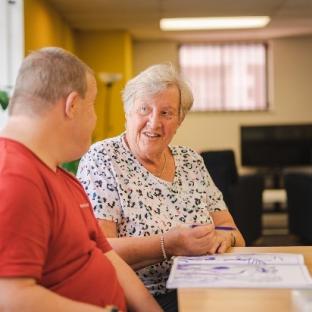
New guidance has just been published to help care homes in Scotland provide appropriate support for people with intellectual disabilities (ID) who have dementia. “My New Home”, a report developed by Healthcare Improvement Scotland and the Care Inspectorate, in collaboration with Alzheimer’s Scotland, aims to support the transition to a care home environment and provide the best outcomes for people with ID and dementia. Age-related dementia is much more common in people with ID, with recent estimates indicating that 13% of people with ID aged between 60-65 have dementia, compared to a figure of 1% in the general population. People with Down’s Syndrome in this age group are at even higher risk of dementia, with approximately 60% living with the disease. The guidance, which is aimed at staff and services involved in supporting people with ID and dementia, and their carers, makes recommendations and identifies supports and resources that can help ease the transition to a care home for people with ID and dementia, featuring the voices of people with lived experience.
The recommendations include using a person-centred approach for decision-making and care planning; ensuring support staff have appropriate knowledge, skills and training; accessing specialist, multi-agency support; making care home environments dementia-friendly; and meeting physical health and meaningful activity needs. Prof. Karen Watchman (University of Stirling, Scotland), who was part of the Working Group which co-developed the guidance, commented: “People with a learning disability are now living for longer and are more likely to develop illnesses like dementia. We hope the new guidance will ensure that any person with a learning disability and dementia will be at the centre of any decision making and their physical needs are met. Moreover, that staff who support will have the appropriate knowledge, skills and training.” Read the guidance, here: