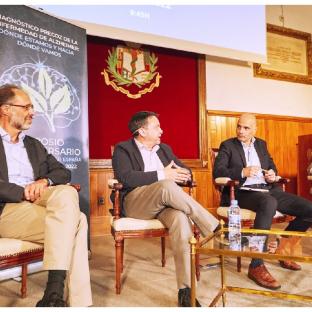
On 9 June, a symposium on “Early Diagnosis of Alzheimer´s Disease: Where we are and where we are going” was held in Madrid, organised by Fundación Alzheimer España (FAE) to mark its 30th anniversary. More than 500 people attended the event, which could be followed via online streaming, as well as in person at the Colegio Oficial de Médicos de Madrid. Healthcare professionals, civil society representatives, patients and family members participated in the event, which was chaired by Micheline Selmes, FAE President and Carolina García, Coordinator of the Strategy for Neurodegenerative Diseases of the Ministry of Health in Spain. D. A. David Pérez, patron of FAE and head of the Neurology service at Hospital 12 de Octubre de Madrid, moderated the event and introduced the speakers. During the first part of the day, different themes were covered around early diagnosis in Alzheimer´s disease (AD), highlighting the use of biomarkers that allow a diagnosis of the disease as early as possible.
The importance of screening protocols in primary care as a fundamental tool for the detection of suspected cases was also discussed. In addition, the point of view of the patient and the family was also highlighted, concerning early diagnosis of AD. The second part of the symposium addressed the most recent and innovative advances in early treatment of AD from a pharmacological and non-pharmacological perspective. In this second part of the day, a person diagnosed with AD had the opportunity to talk about his personal experience in relation to diagnosis and to describe his day-to-day life with the disease. In the last part of the symposium, a roundtable discussion was held, around the question “Are we facing a new era in Alzheimer´s Disease diagnosis?" This roundtable was conducted by Dr Pascual Sánchez, Scientific Director of Fundación CIEN in Madrid. The speakers had the opportunity to discuss about different topics regarding the present and the future of early diagnosis in AD. Finally, family members and other healthcare professionals were able to put different questions to the panellists.