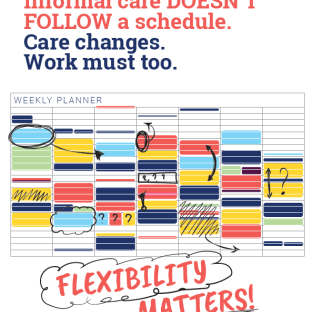
On the occasion of European Carers’ Day, 6 October, Alzheimer Europe is pleased to be a signatory of a Joint European Statement “Care Doesn’t Follow a Schedule. Flexibility Matters”, authored by Eurocarers. The signatories of the Statement are European organisations representing and working with people across Europe in the fields of disability, families, mental health, gender equality, ageing, and care.
Alzheimer Europe is supporting this statement and the related campaign led by Eurocarers, calling on European and national policymakers, employers and other stakeholders to ensure that people with caring responsibilities can genuinely combine work and care.
The EU Work-Life Balance Directive introduced important rights for workers with caring responsibilities, including a minimum of five unpaid working days of carers' leave and the right to request flexible working arrangements. These measures represent an important step forward, but as the statement points out, five days cannot reflect the reality of ongoing, intensive or fluctuating care needs. The challenge is therefore not simply to provide more leave, but to create working environments and social protection systems that can adapt to the reality of care.
Europe's care systems depend on millions of people providing care, often alongside paid employment and they cannot expect informal carers to keep Europe's care systems running while asking them to fit unpredictable care responsibilities into inflexible working lives. The Joint European Statement therefore calls on European institutions, national governments, employers and all relevant stakeholders to make flexibility a reality for people who combine work and care.
Eurocarers, Alzheimer Europe and the other signatories of the Statement call for:
Accessible and meaningful carers' leave
Greater flexibility at work
Protection against economic insecurity
Supportive workplaces
Recognition of informal carers
Flexible access to affordable high-quality long-term care services and respite care.
You can read the full statement, here: LINK PDF ON AE WEBSITE
Find out more about the Eurocarers campaign here: https://eurocarers.org/ecd/
Read their new position paper examining whether the EU Work-Life Balance Directive is delivering meaningful support for informal carers: https://eurocarers.org/from-minimum-standards-to-meaningful-support-eurocarers-calls-for-stronger-work-life-care-policies/