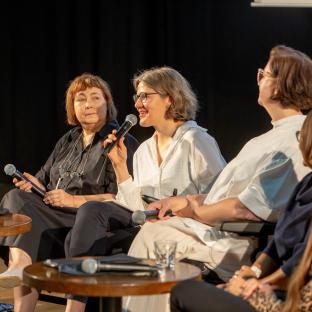
The discussion was organised as part of the World Alzheimer’s Month programme and in connection with the photography exhibition “Step into my shoes”. The event aimed to draw attention towards stigma that surrounds dementia in Lithuania. The discussion panel consisted of Monika Ošmianskienė, Member of the Lithuanian Parliament, Ingrida Žurlytė, Head of the World Health Organization (WHO) office in Lithuania, Ieva Petkutė, founder and head of Dementia Lithuania, Vida Stokienė and Viktorija Šimanauskienė, family carers, and Austėja Dapkutė, neurology resident. The moderator of the discussion was Žydrė Gedrimaitė.
The newest Alzheimer’s Disease International (ADI) World Alzheimer Report, on attitudes around dementia, highlights the systemic gaps that have a direct impact on the health and well-being of people living with dementia and their carers in Lithuania. For example, the report highlighted that a mere 25% of the carers in Lithuania think that there is a sufficient amount of care services accessible to them in their community. This is among the lowest rate in Europe. In addition, the report revealed a worrisome tendency in attitudes considering the rights and the voice of people living with dementia, these are all some of the highest rates in Europe: 75% of carers (and over 80% of the general public) think that family responsibilities should be removed from the person living with dementia; 66% of carers feel that their loved one was ignored by health professionals; 35% of the public in Lithuania think that moving a family member with dementia into a care home, even against their wishes, would be the best option.
The participants of the discussion “Attitudes around dementia and human rights” shared insights about the current situation from different perspectives. Ieva Petkutė highlighted the need to develop cohesive and cross-sectorial systems to address the numerous challenges. Monika Ošmianskienė, stressed the responsibility of civil society to be vocal about the situation and the need for change before the upcoming Parliament elections in October. Vida Stokienė and Viktorija Šimanauskienė shared their experience of receiving services and the challenges caused by the prevalent attitudes among the public. Austėja Dapkutė shared her ideas and insights about the attitudes in the health care system and certain factors that enable these attitudes to prevail in the system, when training doctors. Finally, Ingrida Žurlytė reminded those present that Lithuania has being offered guidance by the WHO to create a dementia plan that would serve all: people living with dementia and their carers, family members, professionals and the wider public.
Pictured: Ieva Petkutė (Dementia Lithuania) takes part in the discussion. Photo by Dainius Stankus