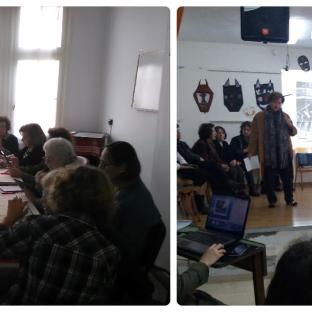
In Greece, scientists from the Association of Alzheimer’s disease of Heraklion “ALLILEGII”, in Crete, backed by generous funding from the TIMA Charitable Foundation, have developed an innovative model of integrated care for healthy older people.
The programme promoted active and healthy ageing. 100 individuals were involved, aged between 64-90 years old, both men and women, with an average education of 12 years, and with very mild cognitive impairment due to factors related to ageing. Participants were submitted to a neuropsychological assessment before and after the trial programme. They attended twice a week for three-hour sessions of cognitive training, relaxation techniques, psychological support, and music therapy. They also participated in cultural, social and leisure activities such as movies, speeches, excursions, museums, theatre, traditional feasts, coffee meetings, local festivals with the cooperation of the local community, and intergenerational activities with primary school children, as well as dinners with live music. Furthermore, they had the opportunity to learn how to use PC programmes (Skype, Facebook, email, Internet Explorer), and how to speak a foreign language (Italian). They also created their own choir.
The ultimate aim of the programme was the improvement of their mental health, mood and attitude towards life after retirement, in addition to assisted adjustment in changes due to ageing; assisted socialisation and the improvement of personal relationships.
The first results from the pilot study were impressive. The participants’ own evaluations are very touching and coincide with the objective neuropsychological data. The original aims of the programme are completely fulfilled. These healthy, older participants felt regenerated and active, with new attitudes towards ageing well. They have better relationships, they socialise more, and they feel mentally and physically healthier. Their common wish was that the programme would continue the following year because they felt that it was an exceptional benefit in their lives. Eventually, the aim is to develop this programme into an integrated model of elderly care with a biopsychosocial approach with proved effectiveness and benefits.
