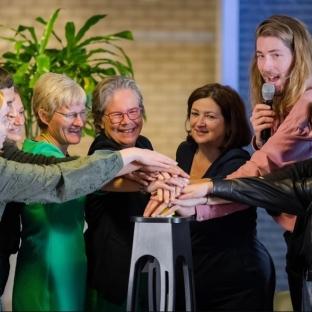
The current generation of young people will inevitably encounter people with dementia, both now and in the future. Either in their private lives or in their jobs or internships. Research carried out by Alzheimer Nederland shows that these young people know very little about dementia and are unsure about how to interact with people with dementia, although they would be happy to learn. The Samen dementievriendelijk (Together Dementia-friendly) youth programme teaches young people in vocational education how to recognise dementia and how to interact with people with the condition. On 20 October 2022, the Minister for Long-term Care and Sport, Conny Helder, joined Alzheimer Nederland and students from the ROC Midden Nederland (Central Netherlands Regional Education and Training Centre), to fire the starting pistol for the programme. At present, 290,000 people in the Netherlands have dementia, and this figure is set to double in the next 20 years.
Most people with dementia live at home, do their own shopping, go to the hairdresser and eat in restaurants. Young people are a vital link in any society that wants people with dementia to continue participating. But how do you know when someone has dementia? And more importantly, how do you interact with them and how can you help? Young people say they are keen to find out. Research among 555 young people has shown that they regularly come into contact with people with dementia. Half of them have (or have had) a relative with dementia and a quarter have some form of interaction with someone with dementia. Yet 55% of them claim to know very little about the disease and only 40% know how to interact with someone with dementia. But they are keen to learn. In fact, 87% of young people want to know more about dementia, and 85% want to learn the best way to interact with and to support people with dementia. On 20 October, the students in Utrecht officially launched the Samen dementievriendelijk youth programme.
At the launch, Christa Reinhoudt recounted her own experience of having Alzheimer’s disease and explained what she needs, in order to continue participating in society. Conny Helder, Minister for Long-term Care and Sport said: “People with dementia live at home for most of their illness. They are part of our society. It’s therefore essential that we all know enough about dementia. We must be able to recognise it, and offer people help in the supermarket or our local streets. Young people are currently training to become professionals who will inevitably encounter people with dementia during their working lives. Not just in the healthcare system, but also as shop workers, plumbers or dental nurses.” Samen dementievriendelijk is an initiative launched by Alzheimer Nederland and the Ministry of Health, Welfare and Sport in 2016. Julie Meerveld from Alzheimer Nederland said: “It’s great that we’ve found an easy way for young people to learn about dealing with dementia. Young people are the future, and they will play a key role in accomplishing a dementia-friendly society.” The youth programme has been specially developed for teachers and comprises an online training course, customised guest lectures and various other ready-to-use teaching methods. Apply for the programme, via: http://www.samendementievriendelijk.nl/scholen