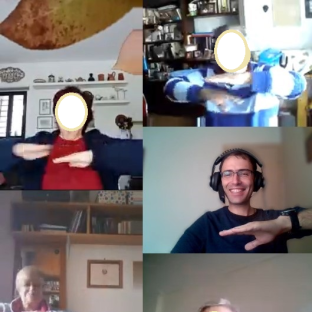
In these difficult days of COVID-19, Greece is trying to cope with the pandemic by staying safe at home, while at the same time continuing the support of vulnerable groups. In an attempt to retain the activities of the day care centres for older people with MCI or dementia as well as for their caregivers, the Greek Association of Alzheimer Disease and Related Disorders (Alzheimer Hellas) in Thessaloniki continues to offer its services to these groups, using alternative methods.
The staff of Alzheimer Hellas offers cognitive training, physical exercises and IT learning via remote education software. The physical trainer has designed an alternative programme of cognitive-physical training for people with MCI and dementia. The staff member in charge of IT training is introducing alternative methods and different virtual platforms for the purpose of maintaining good communication during coronavirus restrictions. Experienced psychologists send cognitive tasks via email, to people with MCI and dementia, in order to maintain daily training routines. This is also supported with a weekly telephone call.
A high priority for Alzheimer Hellas is to continue to ensure solid support for caregivers, especially during this period of confinement, when some of the behavioural issues some people with dementia may have, can be increased in frequency and intensity. Online psychological support and psycho-education are provided for caregivers. Supportive group therapy is also provided, and there is weekly telephone communication and support for those caregivers who are not comfortable with using the internet. An email with educational and counselling material is provided to all caregivers on a weekly basis. This includes links to audio-visual relaxation sessions and advice for coping with anxiety. Doctors are available tom provide medical advice and they can electronically prescribe any required medications.
The health professionals at Alzheimer Hellas have created helpful guidelines on the specific needs of their patients and have put together some frequently asked questions (FAQs). The guidelines can be seen, here:
http://www.alzheimer-hellas.gr/images/Periodiko/Κορωνοϊός_και_Άνοια.pdf
Finally, a 24/7 helpline is also available in order to meet the needs of caregivers and people with dementia alike. Neurologists, psychologists and social workers are just a phone-call away, aiming to cope with urgent problems related to COVID-19.