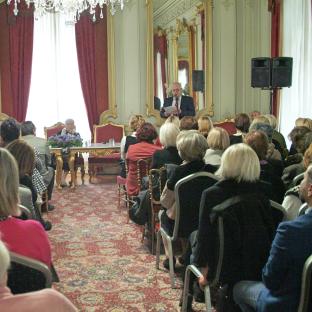
On 7 May, Alzheimer Croatia celebrated its 20 anniversary, at an event in the Palace Dverce - a property of the City of Zagreb used for gala banquets and other representative purposes. This was an opportunity to showcase the society’s work, including, for example, continuous counselling for people with dementia and their family members, available in person or through the national SOS helpline.
Since its foundation on 7 May 1999, Alzheimer Croatia has released various educational materials, delivered public lectures and has marked World Alzheimer’s Day in a variety of ways. In 2006, Alzheimer Croatia became a full member of Alzheimer’s Disease International (ADI) and in 2009 it became a member of Alzheimer Europe. The society began to branch out, at that time, and intensified its activities. Self-help groups were formed, regular attendance at international conferences began, and co-operation with the University of Zagreb also began, so that students in the areas of social work, psychology, educational rehabilitation and medicine could gain practical experience of working with people with dementia.
It has been especially important that, thanks to the influence of Alzheimer Croatia, new regulations have been passed, meaning dementia is no longer considered a mental illness. Since then, Croatian retirement homes have been able to accommodate people with dementia.
Since 2013, the society has been increasing its activity in the area of public awareness-raising. Alzheimer's Cafés, Memory Walks and other actions to help recognise the early signs of dementia have been initiated, and during the European election campaigns for 2014 and 2019, Croatian MEPs and MEP candidates have been encouraged to sign Alzheimer Europe’s Dementia Pledge. In 2014, Alzheimer Croatia, together with the Croatian Medical Association for Alzheimer's Disease, announced the proposal of a Croatian strategy to fight Alzheimer's disease (AD), which was presented to the Croatian Ministry of Health and former Croatian President Ivo Josipović. The increasing prevalence of AD and other dementias has also led to a growing need for other associations to engage in the fight against dementia, and many of these have become affiliates of Alzheimer Croatia.
In 2015, the society began to hold annual educational conferences on AD, focusing primarily on care and nursing practices, which will have an international character, as of 2019.
By the end of 2016, Alzheimer Croatia had started collaborating with Slovenian partners, to implement a European cross-border project, aiming to develop a training programme for the first ever dementia specialist nurses in Southeast Europe, and to make a strong contribution to the creation of the first Croatian recommendations for design of the dementia departments in retirement homes. In that same year, Alzheimer Croatia joined the international Dementia Friends initiative, and the following year, the capital of Zagreb began its efforts to become a Dementia friendly community. The City of Umag followed suit, shortly after.
More recently, Alzheimer Croatia has co-operated in the development of the first university textbook on AD and other dementias, the first national research on dementia attitudes in Croatia, and the development of dementia-friendly retirement homes.
These 20 Anniversary celebrations were also an opportunity for numerous delegates from Croatian ministries, the City of Zagreb and others to thank Alzheimer Croatia for its prominent, long-standing volunteer work, with a special mention for the society’s founder and Vice-president, Mira Dajčić.
