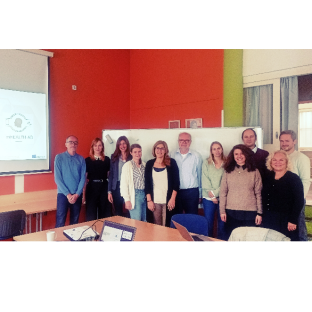
Since November 2021, Turkish Alzheimer Association and Spominčica Alzheimer Slovenija have been participating in the Erasmus+ KA2 Project “mHEALTH-AD - Training Program For Enhancing The Adoption Of Mobile Health Technologies By Persons With Mild Dementia” (2021-1-DE02-KA220-ADU-000028337). The project is led by the Institute for Work and Technology (Germany), involving partners Gestió Sociosanitària al Mediterrani Sl (Spain), Institut Emonicum (Slovenia), Ruhr-Universitaet Bochum (Germany), Aristotelio Panepistimio Thessalonikis (Greece), Schön Klinik Bad Aibling SE & Co KG (Germany) and Innovation Hive (Greece). People who are in the first stages of dementia may already begin to have difficulties living independently. They may need support and care, even though they still retain their abilities in most basic and simple instrumental activities of daily living (ADLs). According to the Quality of Life Model, this support must be based in empowering them towards self-management, a process to help people gain control, including taking the initiative, solving problems and making decisions. Mobile health solutions, also referred to as “mHealth” can contribute to the empowerment of people with mild dementia.
These technologies include applications (apps) that may connect to wellbeing devices or sensors (e.g. bracelets or sleep-pads), as well as personal guidance systems, health information and medication reminders. They cover various technological solutions which, among others, measure heart rate, blood glucose level, blood pressure, body temperature and sleep quality, and deliver communication, information, motivation, and training tools. By using mHealth solutions, people can manage their health more actively and live more independently, thanks to self-assessments or remote monitoring solutions. Additionally, they can receive support from caregivers and healthcare professionals, in a less invasive environment. The adoption of mHealth technologies by people with dementia is, however, quite low, due to several barriers and challenges, such as: perception of usefulness, privacy, cost, lack of awareness about the benefits of mHealth solutions and how to use them for their own self-management, or withdrawal from challenging situations and embarrassment due to limitations in skills, etc. mHEALTH-AD was launched with the main objective of increasing the digital competences of people with mild dementia, with a particular focus on mHealth solutions.
The project will inform people with dementia about the benefits of these technologies and learn how to use them to increase self-management and empowerment. In order to reach these objectives, a training methodology has been developed, based on “learning by doing” and “gamification” where participants can be trained in a “friendly” environment, reducing their fears, concerns, and reservations about the mHealth technologies. The Project is planned to be completed by November 2023, after validation activities are performed in autumn, 2023. Feedback from the participants (people with dementia and formal and informal carers), will be collected through questionnaires and used for the improvement of the material developed. These activities will result in an e-platform offering training materials for carers, and in mHealth "serious games" for people with dementia, which will aim to motivate them to be engaged with mHealth and to increase their digital skills. The mHEALTH-AD project hopes to increase their self-management and empowerment and consequently contribute to the improvement of their overall health. Further details can be found, at: https://mhealth-ad.eu/
