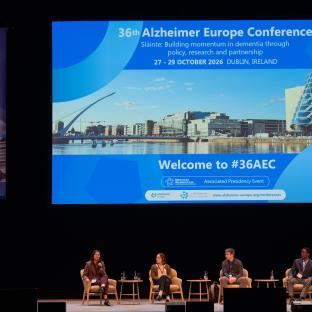
Dublin, 28 October 2026 – The second day of the 36th Alzheimer Europe Conference (#36AEC) “Sláinte: Building momentum in dementia through policy, research and partnership” took place today, 28 October 2026, with the programme focusing on lived experience, dementia policy, disability, social and brain health programmes.
“Living with Dementia: A day in my mind, a day in my life”
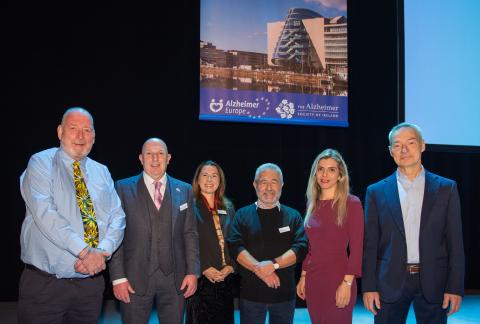
The first Plenary of the conference was a joint session organised by the members of the European Working Group of People with Dementia (EWGPWD) and the European Dementia Carers Working Group (EDCWG), who took to the stage to share their lived experience with delegates. The session was moderated by Kevin Quaid, Chair of the EWGPWD (Ireland) and Trevor Salomon, Chair of the EDCWG (United Kingdom).
Kjell Ehn, a member of the EWGPWD from Sweden, was the first speaker. His talk, “My inner game with Alzheimer’s” focused on how he mentally handles the awareness of his continuously declining cognitive and physical functions, and how he has dealt with the challenges he has experienced along the way.
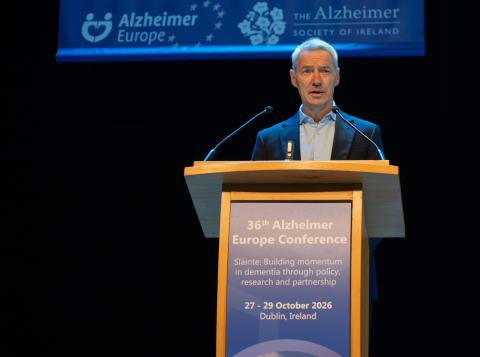
“The main challenge is that you know that there is only one way, and that is downward”, he said, “and you don´t yet know when, how, or at what speed.” He also stressed how hard it is to accept all the things that he suddenly, from one day to the next, has had to start preventing himself from doing, “just for the fear of not being capable”.
He concluded that, when someone is diagnosed with a cognitive disorder such as Alzheimer's disease, there is a need to provide support not only for the physical aspects of the condition but also for handling its mental and emotional challenges. “This support is essential if people, like me, are to continue living life fully and enjoying it for as long as possible.”
Up next, Christina Zioga, member of the EDCWG from Greece, spoke about “The caregiver phenotype: Clinical observations on multitasking, genetic paranoia, and the therapeutic efficacy of peer support”. Her talk explored the lived reality of caring for a person with dementia while balancing multiple roles—as a mother, wife, physician and daughter, highlighting the often invisible emotional, practical and financial burden carried by families, particularly when formal health and social support systems fall short.
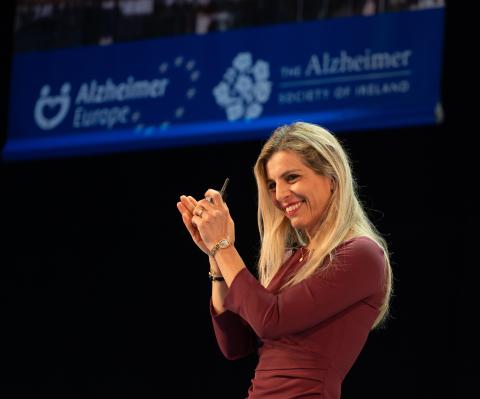
She gave voice to the private fears that many carers rarely express, asking questions such as: “Could I be in my mother’s place in a few years?” and "Will I lose my ability to learn?" She pointed out that “Living alongside Alzheimer's inevitably raises questions about genetics, risk and our own future, while reminding us that dementia affects far more than memory.”
Finally, her talk reflected on where carers find the strength to continue. She said that the European Dementia Carers Working Group had become a source of solidarity, friendship and shared understanding for her and others. She finished with a message of warmth, humanity and hope: “Across borders and cultures, carers discover that they are not alone—and that sometimes, a hug, a laugh and genuine human connection can carry an extraordinary load.”
The next speaker, Hatice Sertaç Süslü, member of the EDCWG from Türkiye, presented “From flight mode to fight mode: How community support transformed me into an empowered family care”. She began by noting that longer lives are worth celebrating — but that they require support:
“My mother’s 80th birthday made me reflect on how many small victories, medical interventions and acts of care can make a longer life possible. Longevity is rarely one miracle; it is hundreds of small victories shared by people living with dementia, families and healthcare professionals.”
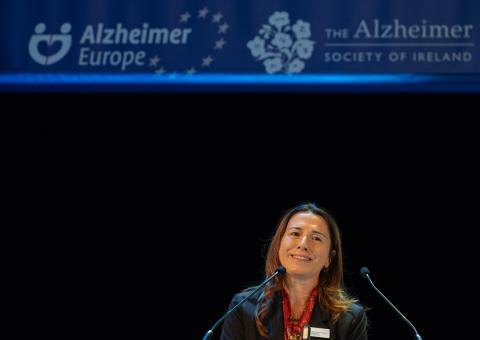
She also pointed out that dementia transforms whole families, not just individuals. “Dementia does not happen only to the person diagnosed. It changes relationships, roles and everyday life for everyone around them. Yet meaningful connection can survive even when memory changes.”
Her closing message was again one of humanity and of strength in connections with others: “You do not have to fight alone. My own journey taught me that being a good daughter did not mean doing everything myself. Support from the Alzheimer’s Association, peer carers, healthcare professionals, my family and an international community taught me to ask for help. My message to other families is simple: connect with your community before you think you need it.”
Stuart Dougall, member of the EWGPWD from the United Kingdom (Scotland) shared that the best advice he was given regarding living well with dementia was quite simple: “Have a focus, have a routine, keep motivating yourself, keep trying things you find difficult, and above all, live your life.”
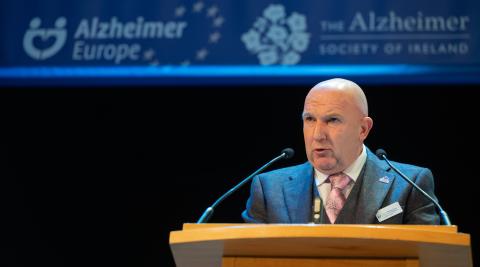
“My life has changed”, he continued, “but it is far from over. I’m determined to keep doing the things I enjoy for as long as I can.” He also said that technology had become an important part of helping him to stay independent, and that “sometimes the simplest solutions can make the biggest difference.”
He decided early on that he would make the very best of his situation for as long as possible, and his powerful message for others diagnosed with dementia was “Dementia may change your life, but it doesn’t have to define it.”
Trevor Salomon and Kevin Quaid thanked all of the speakers for their excellent presentations and the session closed with a heartfelt and rapturous round of applause from the audience.
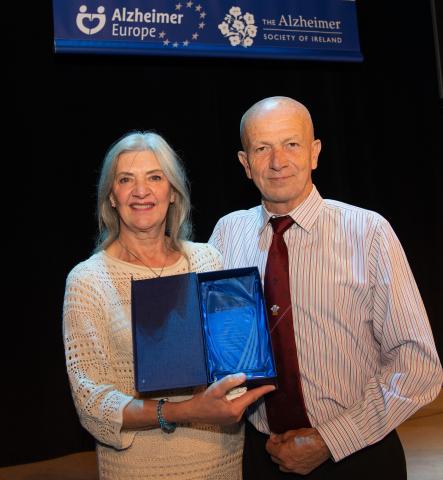
Kevin also presented a trophy to former Chair of the EWGPWD, Chris Roberts, who is attending the conference in Dublin together with his wife and supporter Jayne Goodrick, in thanks for his years with the group and the important role he played in the group and in our work.
Building momentum in dementia through policy
The second Keynote lecture of the conference was delivered by Eamon O’Shea, Emeritus Professor of Economics in the School of Business and Economics at the University of Galway.
Prof. O’Shea has published over 200 scientific papers in refereed journals, including publications in top-ranked journals such as the Journal of Health Economics, Social Science and Medicine, British Medical Journal and the International Journal of Geriatric Psychiatry. He has also authored and co-authored 20 books and monographs, mainly in the fields of ageing, dementia and social policy.
His work has been influential in setting the agenda for the reform of services and policies for older people in Ireland, especially in relation to home care and residential long-stay care. He was Chair of the National Economic and Social Forum Expert Group on Care of the Elderly in 2005/06 and co-authored the influential Creating Excellence in Dementia Care report in 2012 – the forerunner for the Irish National Dementia Strategy. He is also a member of the Commission on Care for Older People established by the Government of Ireland in 2024 to look at care and supports for older people across the continuum of care and with making recommendations for their strategic development.
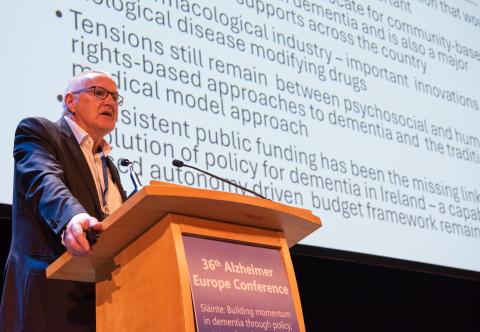
His lecture, entitled “Public policy for dementia in Ireland: past, present and future”, emphasised that care for people with dementia has seen significant improvement in Ireland in the past twenty years.
“There is now a much stronger focus on personhood and psychosocial functioning across all aspects of care”, he said, noting that the new Model of Care for dementia has a strong emphasis on the availability of services to allow for earlier assessment and diagnosis."
He also stressed, however, that policy implementation continues to be a problem, “mainly because of inadequate funding to support a genuine person-centred, autonomy-oriented approach to care of people with dementia” and pointed out that “there is still no statutory scheme for home care provision in Ireland. Family carers continue to be the main source of support for people with dementia.”
In closing, Prof. O’Shea drew attention to some of the differences in services and supports for people with dementia across the country: “There is wide variation in waiting times for diagnostic assessment of dementia. Workforce shortages and dementia training are also impacting on dementia care in Ireland,” he said.
Dementia in national and European disability, social and brain health programmes
The second plenary session of the conference took the form of a roundtable discussion, moderated by Angela Bradshaw, Deputy Executive Director of Alzheimer Europe. The session was titled “What place for dementia in national and European disability, social and brain health programmes?”, a question which was debated by four expert speakers, Iracema Leroi (Global Brain Health Institute, Ireland), Soohyun Kim (OECD Health Division), Anthony Scerri (University of Malta) and Louise Hopper (Dublin City University, Ireland).
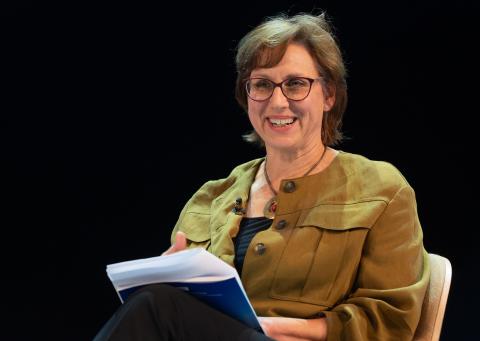
Iracema Leroi, Professor in Geriatric Psychiatry at Trinity College Dublin and the Global Brain Health Institute (GBHI) said:
“Dementia must have a clear place within national and European brain health programmes, while retaining its own distinct policy identity. Brain health is not simply the absence of disease; it is the optimisation of cognitive, emotional, motor and social functioning across the life course, including for people living with neurodegenerative disease and dementia. This creates an important dual role: promoting prevention and risk reduction at population level, while also supporting function, participation and quality of life after diagnosis.
“Effective brain health strategies require alignment between European and national policy leadership and locally informed implementation, with meaningful engagement of professionals, communities and people with lived experience. European organisations can provide strategic direction, shared frameworks and political momentum, while national systems must translate these into context-specific priorities and action.
“The brain health narrative brings prevention, possibility and optimism; the dementia agenda brings urgency, rights, care and lived experience. They should remain distinct but complementary, strengthening rather than eclipsing one another.”
Soohyun Kim, Health Policy Analyst at the Organisation for Economic Co-operation and Development (OECD) highlighted that, across OECD countries, an estimated 61 in every 1,000 adults aged 65 and over were living with dementia in 2023.

“Our review of 29 OECD countries finds a strengthened focus on brain health, prevention, earlier diagnosis, non-pharmacological interventions, and support for family carers over the past decade, while closely monitoring evidence on emerging disease-modifying treatments. Although progress in psychosocial approaches is encouraging, their implementation in routine practice often falls short of the evidence. Limited workforce training, uneven reimbursement arrangements, and fragmented support systems can prevent effective interventions from reaching people living with dementia and their families. As countries prepare for rising demand and new treatment options, the next frontier is turning evidence and policy commitments into real-world outcomes. This will require sustained investment in workforce skills, co-ordinated service delivery, and improved support for carers, ensuring that innovation leads to meaningful improvements in people’s daily lives.”
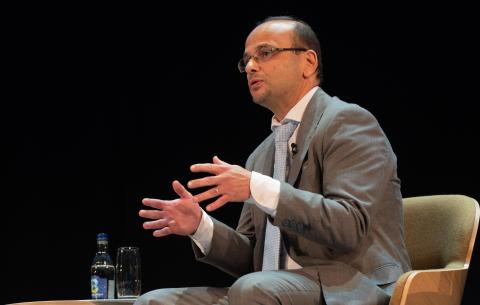
Anthony Scerri is a doctor of gerontology at the University of Malta and Vice-Chair of the Malta Dementia Society. He contributed to the discussions, stating:
“More dementia research does not necessarily mean that all the evidence we need is being generated. Our analysis of more than 200,000 publications found major growth in dementia research, but research remains concentrated on disease mechanisms and diagnosis, with comparatively less attention to care and support.
“Health and social care policies on dementia need evidence about living with dementia, not only about the disease. Research must address independence, participation, post-diagnostic support, caregiver needs, workforce capacity, access, inequalities and how effective interventions can be implemented in everyday services.”
He also stressed that people living with dementia and their families should help shape the research agenda, noting that “aligning research with lived experience can help ensure that future social and disability policies respond to what people actually need to live well with dementia.”
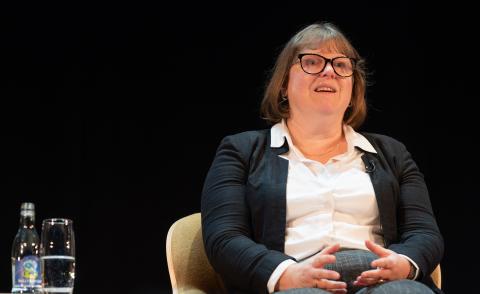
Louise Hopper, Associate Professor of Psychology and Programme Chair of the BSc in Psychology and Mathematics at Dublin City University, commented that “dementia should be recognised as both a health condition and a social issue. National and European strategies must promote rights, participation, inclusion and quality of life, not simply diagnosis and treatment.
“Effective national strategies require a robust National Dementia Registry as a foundational human right because we cannot design equitable health or disability programs when we remain blind to the true scale, diverse needs, and real-world costs of dementia across our communities.
“European social health funding heavily defaults to early-stage Alzheimer’s. True disability inclusion means expanding national policies to support individuals and families navigating the complex, moderate-to-advanced stages of young-onset and rarer dementias.”
Parallel sessions and special symposia
Prior to the first plenary in the morning, delegates were able to choose from a possible ten parallel sessions including one organised by our co-hosts The Alzheimer Society of Ireland, titled “Creating a Dementia-Inclusive Society Through Collaborations and Partnerships” and one by INTERDEM, on “Young Onset Dementia”. Conference Silver sponsors Bristol Myers Squibb held a session called “Universal Patient Language (UPL): Clearer, More Compassionate Patient Communication”, whilst another, “Mapping Modifiable and Non-Modifiable Risk: A Dementia Research Network Ireland Showcase” was organised by the Dementia Research Network Ireland (DRNI). Other sessions included “Detection and diagnosis” (moderated by Margarita Reyes, Project Officer), a series of Quick Oral Presentations on the topic of research (moderated by Wiesje van der Flier, Board member of Alzheimer Europe), “Preparing for new AD treatments” (moderated by Mario Possenti, Vice-Chair of Alzheimer Europe), “Care work force” (moderated by Charles Scerri from the Malta Dementia Society), “Hospital care” (moderated by Anthony Scerri from the Malta Dementia Society), and “Ethical and legal issues” (moderated by Maria do Rosário Zincke dos Reis, Alzheimer Europe Chairperson).
In the middle part of the day, prior to lunch, several symposia took place, including one called “From biomarkers to lived experience: Acting earlier in Alzheimer's disease”, organised by conference Gold sponsors Eli Lilly & Company and moderated by Angela Bradshaw, Deputy Executive Director of Alzheimer Europe. Concurrent special symposia included one organised by DEMPACT and one by Fondation Médéric Alzheimer, as well as one from our co-hosts The Alzheimer Society of Ireland, with European and national policymakers.
The afternoon saw a further ten parallel sessions, including one from The Alzheimer Society of Ireland, called “Partnership in Practice: Embedding Lived Experience in Dementia Research in Ireland” and one organised by INTERDEM, about “Psychosocial Aspects of Dementia Prevention”.
Other parallel sessions were: “Treatment and medical management” (moderated by Angela Bradshaw), a series of Quick Oral Presentations, focusing on the theme of people (moderated by Roslynn Vella, Vice-Chair of the EDCWG), a session called “Co-creation to generate impact: lessons learned across the SPREAD+ and QoLEAD consortia” organised by DEMPACT, one on “Early diagnosis, post-diagnostic supports and dementia-inclusive communities” held by Ireland’s Health Service Executive (HSE), “Dementia care in rural areas” (moderated by James Pearson from Alzheimer Scotland), a session focusing on the LGBTQ+ community (moderated by Paddy Crosbie, EDCWG member), another about day care (moderated by Rabih Chattat from INTERDEM), and a final one looking at topics around gender and dementia (moderated by Edyta Ekwińska, President of Alzheimer Poland).
Throughout the day, delegates were able to view poster presentations, exhibited in the Foyer, and to speak to poster presenters about their research.
Later on, at the end of the second day of #36AEC, three further symposia were organised, one organised by JADE - the Joint Action on Dementia, one session sponsored by EMEIS, and another called “Dementia Researchers of the Future”.
“Dementia researchers of the future” symposium at 36AEC highlights work of nine early-stage researchers
The session “Dementia Researchers of the future” has been a staple of our conference for several years and is sponsored by The Alzheimer Europe Foundation and the INTERDEM Academy. This year’s edition was chaired by Heike von Lützau-Hohlbein (Alzheimer Europe Foundation Chair) and Fania Dassen (INTERDEM Academy).
This session afforded a great opportunity for nine early-stage researchers, selected by our jury, to benefit from bursaries to attend and present at the conference. The selection of the bursaries was based on the best average scores each received from the jury members. The selected researchers were:
• Tarsitsa Ntova (Greece), “Detecting dementia in the Deaf community in Greece: Adaptation of the British Sign Language-Cognitive Screening Test in Greek Sign Language-Preliminary results”
• Thanos Chatzikostopoulos (Greece), “Neuropsychiatric symptom clusters across the cognitive impairment spectrum: a data-driven analysis integrating AD biomarkers and clinical profiling”
• Ioannis Stamelos (Greece), “Early-Onset Patients Wait Twice as Long to Reach a Specialist Telemedicine Service: Evidence from Remote Islands in the Aegean Archipelago”
• Anja Mrhar (Slovenia) “Dietary correlates of increased Alzheimer’s disease blood-based biomarkers”
• Özlem Çiçek Doğan (Türkiye) “Person-Centered Disaster Preparedness Program for Family Caregivers of People Living with Dementia: A Mixed-Methods Study in Türkiye”
• Evangelia Smaragdaki (Greece), “Apraxia as a driver of functional disability in neurodegeneration: from phenotyping to rehabilitation”
• Efthalia Angelopoulou (Greece), “Beyond memory: caregiver distress from Mild Behavioral Impairment as an early clinical signal in prodromal Alzheimer’s disease”
• Electra Chatzidimitriou (Greece) “Personality Correlates of Functional Status in Early-Stage Behavioral Variant Frontotemporal Dementia (bvFTD)”
• Anastasia Tsouvala (Greece), “Trajectories of Self-Awareness Across the Alzheimer’s Disease Spectrum: A Systematic Review of Its Potential as an Early Diagnostic Marker”.
Congratulations to all of them!
Important updates from conference co-hosts The Alzheimer Society of Ireland
Irish Dementia Working Group launches updated Charter of Rights for People with Dementia
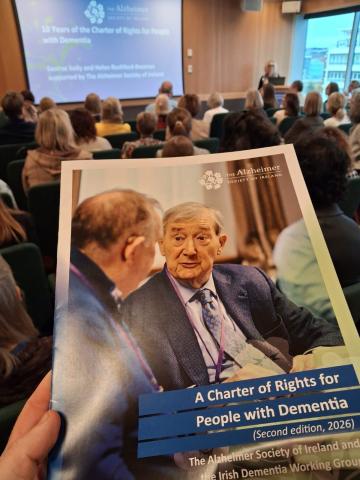
Today at the 36th Alzheimer Europe Conference in Dublin, The Alzheimer Society Of Ireland (ASI)’s Irish Dementia Working Group launched the updated Charter of Rights for People with Dementia.
Created by and for people living with dementia, the Charter calls for a rights-based approach that supports people to live well, be heard and remain active members of their communities.
Produced through extensive consultation with people living with dementia across Ireland, the updated Charter places their voices, experiences and priorities at its heart, reaffirming that a dementia diagnosis should never diminish a person's rights, humanity, personhood or ability to participate in decisions affecting their own lives.
Read the Charter: https://alzheimer.ie/creating-change/policy-on-dementia-in-ireland/human-rights-and-dementia/
Europe can do more to support people living with dementia
European and Irish political leaders joined advocates and experts for a special panel at the 36th Alzheimer Europe Conference in Dublin. Meeting at the Convention Centre Dublin on 28 October 2026, they asked how dementia could be pushed higher up Europe’s political agenda.
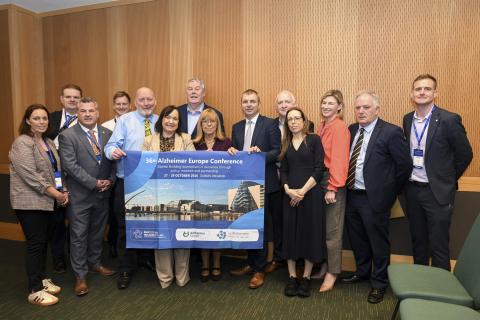
The panel backed the case for a European Dementia Action Plan spanning health, research, social policy and human rights. Drawing on Alzheimer Europe’s Helsinki Manifesto and the Neurological Alliance of Ireland Joint Declaration on Advancing Neurological Health, speakers set out practical steps for action at EU and national level.
Journalist and author Ken Murray moderated the session, which opened with Michael McGrath, European Commissioner for Democracy, Justice, the Rule of Law and Consumer Protection. Thanking civil society for championing lived experience, Commissioner McGrath said: “Our ambition must be to build a Europe where people with dementia can live with dignity, retain their independence for as long as possible and access the support that they and their families need.”
Nina Carberry MEP of Fine Gael and the European People’s Party, Co-Chair of the European Alzheimer’s Alliance, shared her personal experience and called for a stronger EU-wide strategy on neurodegenerative diseases.
Ciaran Mullooly MEP of Independent Ireland and Renew Europe, also an Alliance member, highlighted rural isolation and the steps communities needed to take to keep people connected.
Senator Fiona O’Loughlin of Fianna Fáil spoke as her party’s Seanad leader and Chair of the All-Party Oireachtas Group on Dementia.
Sinn Féin TD Ruairí Ó Murchú brought experience from Oireachtas committees covering EU affairs, disability, children and equality.
Emer Costello, Rehab Group’s Head of Advocacy and Campaigns, brought a campaigning perspective as a former Labour Party MEP for Dublin and former Lord Mayor of Dublin.
Mags Rogers, Chief Executive of the Neurological Alliance of Ireland, brought the collective voice of organisations supporting people affected by neurological conditions.
Alzheimer Europe would like to extend a warm welcome to all delegates and remind everyone to use the hashtag #36AEC to join/follow the conversation on our social media channels (Live posting on BlueSky, daily posting on Facebook, Instagram and LinkedIn)
Acknowledgement
Alzheimer Europe gratefully acknowledges the support of all conference sponsors, with particular thanks to Gold sponsors, Lilly and Roche; Silver sponsors, Bristol Myers Squibb and Siemens Healthineers; and Bronze sponsors, BioArctic, Biogen, Eisai, Firalis, MSD and UCB.
