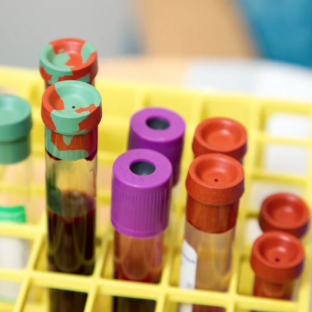
According to a new study published in Nature Aging, people at higher risk of developing dementia in later life could be identified by screening for abnormal levels of specific blood proteins. Using blood samples from over 4,100 participants in the Atherosclerosis Risk in Communities (ARIC) study, which began in 1987, a team of researchers led by Prof. Joseph Coresh (Johns Hopkins Bloomberg School of Public Health) used the SomaScan platform to analyse the levels of over 5,000 different plasma proteins. Evaluating blood samples from healthy participants in late middle age, the researchers identified 38 proteins that were linked to the development of dementia within 5 years. Looking at blood samples taken from a much younger group of over 11,000 participants almost 20 years previously, a similar association was identified for 16 proteins, predicting the development of dementia over 20 years later. A validation study using samples from a different, Icelandic cohort found similar changes for 6 of the 16 proteins, one of which was a protein called SVEP1, which has previously been linked to the development of Alzheimer's disease in analyses of genetic risk.
