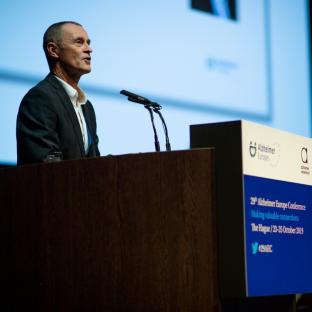
RADAR-AD’s project leader, Professor Dag Aarsland (King’s College London) gave a presentation at the 29 Alzheimer Europe Conference (#29AEC). His presentation took place on day two, 24 October 2019, which focused on diagnosis, post-diagnostic support, technology and e-health. In his presentation “What role for ‘wearables’ in the detection of people at risk of dementia and in monitoring disease progression?”, Prof. Aarsland explained that measures of functional impairment in Alzheimer’s disease (AD) depend on direct clinical observation or on caregiver recall. This, he stated, makes them more difficult to achieve and, in fact, less accurate. In this regard, when diagnosing AD, the presence of functional impairment is compulsory. However, research into daily activities has discovered that functional impairment develops during the pre-clinical stages of AD.
Measuring cognitive, behavioural and other clinically relevant domains, in people who have been diagnosed with AD in their daily environments, has been made possible through the use of remote measurement technologies. These technologies present an opportunity to obtain detailed data from different time sets, which essentially constitutes a valuable improvement of the current situation regarding assessment. Moreover, Prof. Aarsland elaborated that in RADAR-AD a combination of devices is used, including wearables and smartphone applications that present a promising novel approach in personalised medicine. He explained that this will be done “by offering the right treatments to the right patients for maximum effectiveness and minimum waste”.
During his presentation, Prof. Aarsland explained that everyday activities are key criteria for diagnosis, and that aspects which people worry about, such as changes in daily function, have a great impact on quality of life. Nevertheless, he asserted, sensitive outcome measures for functional decline are still missing. He also emphasised the fact that remote technologies offer great opportunities to fill this gap.