I am a member of Trizee, a Belgian association bringing together people living with young-onset and other forms of dementia in a spirit of solidarity and mutual support. I am also a member of Alzheimer Europe’s European Dementia Carers Working Group. Through these roles, and wherever possible by contributing to policy discussions and other decision-making forums, I work towards a better world for people living with dementia and their carers. I believe it is essential that people with dementia and their families have a voice in decisions that directly affect their lives.
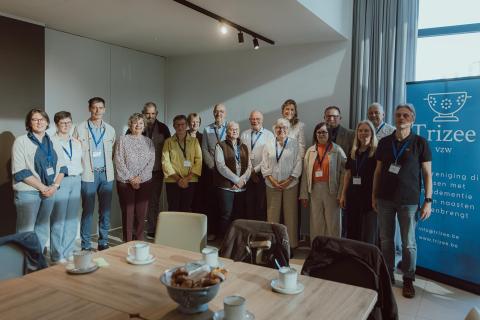
Recently, Trizee invited Belgian Minister of Justice Annelies Verlinden and Member of Parliament Katrien Schryvers to listen to our experiences and views on the planned reform of Belgium’s euthanasia law. We claimed our place in this debate, and we were heard. The conversation was open, emotional and respectful. People living with dementia and their carers spoke for themselves about their fears, wishes and hopes. These were not abstract discussions about legislation. They were personal stories from people who are living with dementia and facing these questions themselves.
For us, the most important message of this meeting was simple: talk with us, not about us. This is at the heart of what Trizee stands for: ensuring that people living with dementia and their carers have their own voice in decisions that affect their lives. We do not want others to speak on our behalf without involving us. We want to share our experiences, express our wishes and help shape the policies that will determine our future.
In Belgium, an advance directive for euthanasia can currently only be used when a person is irreversibly unconscious. It cannot be used when someone has advanced dementia and is no longer legally competent to make decisions but remains conscious.
This creates a painful dilemma. People who fear losing their decision-making capacity may feel forced to choose euthanasia earlier than they would wish, while they are still competent to make the request. Those who wish to wait may lose the possibility of making that choice themselves.
Many Trizee members want the law to change. They want people to be able to express their wishes while they are still competent, including a request for euthanasia at a later stage of dementia, under carefully defined conditions. This raises difficult ethical questions, including how to respect previously expressed wishes while also taking account of the person’s feelings and signals at that later stage. These questions must be addressed carefully, with the voices of people with dementia at the centre.
Equally important, the right to choose must never become a substitute for good care. People with dementia and their families must be able to count on appropriate, accessible and continuous support throughout the disease. The discussion about euthanasia must never be driven by a lack of care or support.