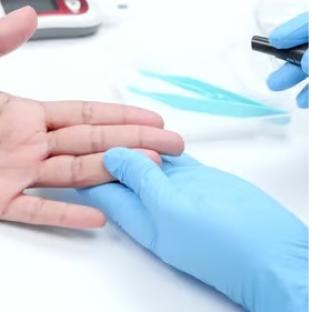
Blood biomarkers have emerged as accurate tools for detecting Alzheimer’s disease (AD) pathology, offering a minimally invasive alternative to traditional diagnostic methods such as imaging and cerebrospinal fluid analysis. A new study recently published in Nature Medicine investigates the feasibility of using dried blood collected via simple finger prick to detect AD biomarker pathology. The study, part of the DROP-AD project, was led by investigators from the University of Gothenburg and enrolled 337 participants from 7 medical centers in Europe who took their blood by the finger prick method. Participants had an average age of 70.8 years, with 27.6% living with mild cognitive impairment and 14.6% diagnosed with AD. The main goal of the study was to see how well blood-spot measurements of p-tau217, widely viewed as the most accurate blood biomarker of early amyloid pathology, stack up against conventional blood draws. Findings showed that the levels of p-tau217 in these samples were closely matched to those found in regular blood samples and the degree of agreement was 86 percent. Two other biomarkers for Alzheimer's, GFAP and NfL, also showed strong agreement. "While we're still years away from clinical use, we're opening doors to research that was previously impossible – studying diverse populations, conducting large-scale screening studies, and including communities that have been historically underrepresented in Alzheimer's research", said Nicholas Ashton.