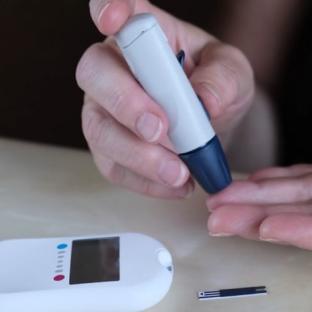
New research findings presented at the Alzheimer’s Association International Conference (AAIC), in Amsterdam (Netherlands), show that blood tests may increase the accuracy and accessibility of Alzheimer’s disease (AD) diagnosis and monitoring. This research is timely and important with the recent US Food and Drug Administration (FDA) approvals of AD treatments targeting amyloid-beta where confirmation of amyloid build-up and biomarker monitoring are required to receive treatment. Hanna Huber from the University of Gothenburg (Sweden) presented a pilot study investigated a new way of detecting key AD biomarkers by dropping a small blood sample onto a blood spot card. The use of blood samples to detect amyloid and other markers of AD has become standard procedure for monitoring patients in clinical trials. However, this presents logistical challenges as it requires strict, time-limited and temperature-dependent protocols. In this study, researchers designed a method to analyse finger prick tests for AD, which can be performed at home easily without the need for clinician oversight and without a lot of preparation or processing (time, temperature, storage).
Blood samples were collected from 77 patients attending a memory clinical in Barcelona using traditional needles and syringes and also from a finger prick, similar to diabetes blood testing. Cerebrospinal fluid samples were also obtained from some patients. The blood samples were transferred onto dry blood spot cards and shipped overnight, without temperature control or cooling, to the University of Gothenburg (Sweden), where they were extracted from the blood spot cards and tested for the presence of AD-related biomarkers. All were detectable in the finger prick samples. In the vein blood spots, the levels of AD-related biomarkers associated strongly with standard blood analysis. The presenting author added that the pilot study shows the potential of remote collection and measurement of AD biomarkers including the future potential for at-home testing by a patient or a family member. Another study examined for the first time the use of blood-based biomarkers for AD in primary care and compare them to the diagnostic accuracy of primary care physicians.
The study recruited 307 middle-aged to elderly patients at 17 primary care centers in Sweden (mean age=76 years old). Primary care exams included cognitive testing and brain scans. Participants also provided a venous blood sample which was analysed to determine concentrations of beta-amyloid and phosphorylated tau. Findings showed that blood tests were 85% accurate in identifying AD-related changes, significantly better than primary care physicians with around 55% accuracy who did not have access to the test. “Due to the lack of accurate diagnostic tools, it is currently very difficult for primary care doctors to identify Alzheimer’s disease, even among patients with cognitive impairment. This too often leads to diagnostic uncertainty and inappropriate treatment. Blood tests for Alzheimer’s disease have great potential for improving diagnostic accuracy and proper treatment of people with Alzheimer’s. These tests may become even more important in the near future, as new drugs that slow down the disease in its early stages become more widely available.”, said Sebastian Palmqvist, Presenting author from Lund University (Sweden). Read the AAIC press release: https://aaic.alz.org/releases_2023/finger-prick-blood-test-alzheimers-disease.asp