Recruitment and retention of participants remain key challenges in dementia research and can affect the representativeness and generalisability of study findings. At the same time, dementia research increasingly depends on the effective use and sharing of large datasets to generate new insights, reduce duplication and make better use of limited resources. However, data are not routinely shared, limiting the pace of scientific progress.
On 22 April 2026, Alzheimer Europe launched its new report on “Dementia Research Participation and Data Sharing in Europe”, which examines how participation in dementia research and the sharing of research data can be strengthened across European countries. The report brings together evidence from multiple sources, including a review of the scientific literature, a European-wide public opinion survey and consultations with people affected by dementia, as well as insights from researchers, clinicians, funders and regulators.
The findings show that people are generally motivated to participate in dementia research, particularly by altruistic reasons such as helping future generations and contributing to the development of better treatments. They are also more willing to participate by having access to information, receiving feedback on study results and supportive relationships with researchers.
However, important barriers remain. One of the most frequently reported obstacles was a lack of awareness of available research opportunities, with many people indicating that they had never been invited or did not know how to take part. Additional barriers include practical challenges such as limited time and travel constraints, concerns about the physical and emotional burden of participating and uncertainty about how personal data will be used and protected.
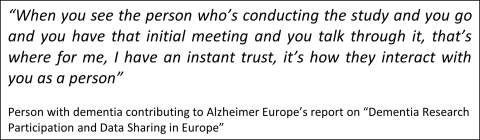
The report also highlights that trust plays a central role in both research participation and data sharing. Trust is built through transparent communication, respectful interactions and clear information about study procedures and data use. People with lived experience emphasised the importance of being treated as partners in research and of receiving feedback on study outcomes (Figure 1).
Attitudes towards data sharing were broadly positive, with most respondents recognising its importance for advancing dementia research. Data sharing was seen as a way to accelerate scientific discovery, reduce duplication and lessen the burden on participants. For example, 88% of survey-respondents agreed that sharing data is important for making progress in dementia research and 86% indicated that it was acceptable for researchers to share data as long as people’s identity remained confidential. At the same time, concerns still remain about privacy, potential misuse of data and the lack of clarity about how data are shared and with whom. In practical terms, data sharing is further hindered by fragmented data systems, complex approval processes and differences in the interpretation of data protection requirements.
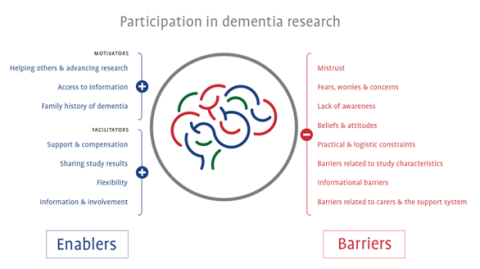
Figure 1 - Clusters of barriers and enablers to participation in dementia research as identified by Alzheimer Europe's report on "Research Participation and Data Sharing in Europe"
Based on these findings, the report sets out a series of recommendations to improve participation in dementia research and to facilitate responsible data sharing. These include key measures such as increasing awareness of research opportunities, improving accessibility and support for participants, strengthening trust through clear communication and ensuring that data sharing practices are secure, transparent and aligned with participants’ expectations.
Alzheimer Europe would like to thank all those who contributed to the development of this report, including members of the European Working Group of People with Dementia, the European Dementia Carers Working Group, its member organisations and members of the public across Europe.
Alzheimer Europe’s report on “Dementia Research Participation and Data Sharing in Europe” was supported by funding from Gates Ventures.
You can download the new report here: https://www.alzheimer-europe.org/resources/publications/dementia-research-participation-and-data-sharing-europe