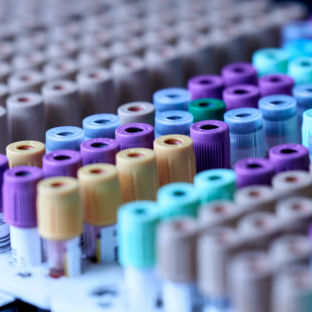
Blood tests that can measure biomarkers for Alzheimer's disease (AD) offer the potential to detect proteins that accumulate in the brain during the development of AD, in a minimally-invasive way that avoids lumbar punctures and costly PET scans. These biomarkers, if proved to be accurate, could help diagnose AD and monitor disease progression. However, there is an acknowledged lack of diversity in many clinical studies on AD, with an under-representation of Black and minority ethnic groups. In a new study published in the Neurology journal on 22 April, researchers show that experimental blood tests for AD biomarkers perform differently in Black participants compared to their White counterparts. In their study, a team of researchers led by Suzanne Schindler and John Morris of the Washington University School of Medicine (USA) used different test platforms to measure the levels of amyloid beta, tau and neurofilament light chain (NFL) biomarkers in blood plasma from 76 matched participant pairs of African American and non-Hispanic White backgrounds.
The average age of participants was 68.4 years and over 90% did not have any cognitive impairment. As well as measuring biomarkers in blood samples, the researchers performed brain PET scans and analyses of cerebrospinal fluid samples, gold standard methods for detecting biomarkers for AD. The study showed that a test platform that uses mass spectrometry to detect amyloid beta performed well regardless of ethnicity, accurately measuring amyloid beta proteins in blood samples from participants irrespective of ethnicity. On the other hand, blood tests using a different platform to detect tau and NFL were not as sensitive, and performed differently in Black participants. In these individuals, a model that combined blood tests for tau and NFL was only validated in approximately 30% of participants - compared to 65-76% of White participants.
https://n.neurology.org/content/early/2022/04/22/WNL.0000000000200358