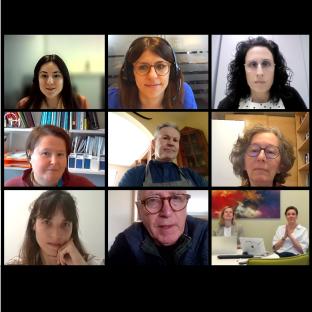
On 22 April, members of the Multi-MeMo Advisory Board (AB) gathered for an online meeting. Multi-MeMo (“Shorter- and longer-term mechanisms of multimodal interventions to prevent dementia”) is a European funded project that focuses on brain health in older people, overall, and tailored, multidomain (i.e., targeting simultaneously multiple risk factors) interventions for the risk-reduction of cognitive impairment and dementia, in particular.
The meeting brought together four Advisory Board members, including members of the public both with and without cognitive impairment. It was structured as an informative session divided into two main parts. The programme reflected topics that Advisory Board members had expressed particular interest in and requested to hear more about. The first part focused on socio-economic status and its impact on multimodal lifestyle intervention trials. Discussions highlighted key issues such as barriers to participation, their influence on motivation and drop-out rates and the overall implications for trial outcomes. Three presentations explored this topic from different perspectives. Mariagnese Barbera (University of Eastern Finland) addressed the role of education level in dementia prevention trials. This was followed by a presentation from Lisa Waterink (Amsterdam UMC) on geographical factors. Finally, Laura Forcano and Natalia Soldevila-Domenech (Hospital del Mar Research Institute) discussed the importance of income in shaping participation and outcomes in dementia prevention studies. The second part of the meeting briefly addressed disease-modifying drugs. Cindy Birck (Alzheimer Europe) provided an update on European national decisions regarding these drugs across Europe.
Following the presentations, participants engaged in an interactive discussion, asking questions and sharing perspectives. The meeting was facilitated by Sarah Campill (Alzheimer Europe), ensuring an open exchange between AB members and researchers.