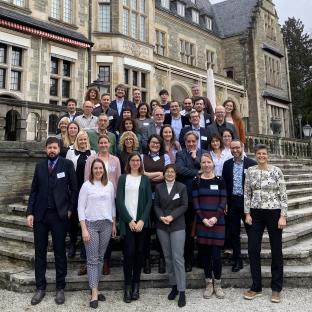
Between 13-15 January (Frankfurt, Germany), Angela Bradshaw represented Alzheimer Europe at the kick-off meeting of the Prevention and Remediation of Insulin Multimorbidity in Europe (PRIME) project, a 5-year long project which aims to explore the mechanisms that link obesity and diabetes to brain disorders such as obsessive-compulsive disorder and Alzheimer’s disease. The PRIME project was developed in response to a Horizon 2020 call on “understanding causative mechanisms in co- and multimorbidities combining mental and non-mental disorders” and is led by Professor Barbara Franke, Chair of Molecular Psychiatry at Radboud University in Nijmegen. PRIME brings together a multidisciplinary team that includes academic institutions in Italy, Spain and Germany as well as SMEs, NGOs and patient organisations. Insulin, a hormone produced by the pancreas, is responsible for regulating the metabolism of carbohydrates (including sugars), fats and proteins. Insulin dysregulation is a key feature of metabolic disorders such as type 1 and type 2 diabetes, and has also been implicated in obesity. More recently, studies have shown an association between insulin dysregulation and dementia, as well as mental illnesses characterised by compulsive behaviours. The PRIME project was founded on the hypothesis that insulin dysregulation underlies the multimorbidity associated with major mental and somatic diseases.
The PRIME project has three key goals: 1) to extend our understanding of insulin multimorbidity across the lifespan, 2) to understand the causal mechanisms linking somatic and mental insulin-related illnesses, and 3) to develop tools for early diagnosis, improved clinical care and prevention of insulin-related lifespan multimorbidity. To achieve these goals, PRIME will use existing clinical registry, cohort and population datasets to explore the links between insulin dysfunction and compulsivity disorders or dementia. Potential mechanisms will be validated and refined using animal and cell models of disease, providing proof-of-concept for drug, dietary and lifestyle intervention approaches. Insulin-related mechanisms will be further tested and refined using clinical genetic and genomic datasets. In addition to increased mechanistic understanding, the PRIME project aims to outline new directions for research and clinical care, including medication and lifestyle interventions. The PRIME kick-off meeting brought together representatives of the 17 partnering organisations in PRIME. Three patient organisations were represented, including Alzheimer Europe, as well as members of the external Scientific and Ethical Advisory Board. Over the course of the kick-off meeting, all 8 work packages were presented and discussed in detail. The meeting finished with an open discussion on how best to disseminate the activities and learnings of the PRIME project to academic, industry, public and patient stakeholders.
The PRIME project receives funding from the European Union’s Horizon 2020 research and innovation programme under grant agreement No 847879.
