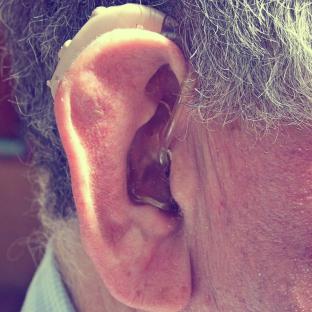
An international team of scientists has found that people with mild cognitive impairment (MCI), who use hearing aids have a significantly lower risk of developing dementia and experience a slower cognitive decline.
The new paper, published in the journal Alzheimer's & Dementia: Translational Research & Clinical Interventions on 14 February, is the first to investigate the link between hearing aids and progression to dementia in individuals with MCI.
The research team was led by Dr Magda Bucholc of Ulster University and used data from the National Alzheimer’s Coordinating Center (NACC). The researchers analysed a sample of more than 2,000 people over the age of 50 with hearing impairments, whose cognitive status ranged from MCI to dementia.
MCI involves decline in cognitive abilities greater than normal age-related changes but not severe enough to meet diagnostic criteria for dementia. Many individuals with MCI do not progress to dementia and may even regain normal cognitive ability.
The study also looked at how participants’ scores in a standard cognitive test for dementia changed over time. Researchers found that the mean annual rate of decline in cognitive scores for non-hearing aid users with MCI was nearly 30% higher than the average rate of change for hearing aid users.
It is not yet known with certainty why hearing loss is associated with increased dementia risk. Potential explanations include a reduction in people’s ability to engage socially, resulting in higher rates of depression or loneliness, and/or changes to the brain associated with the impact of sensory deprivation. There is also the possibility that hearing problems require greater use of cognitive resources when individuals are engaged in listening.
Dr Sarah Bauermeister of Dementias Platform UK (DPUK) co-authored this new study. You can find out more about it, on the DP UK website: