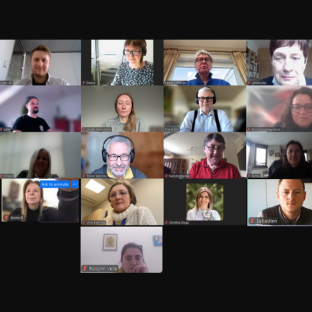
The European Dementia Carers Working Group (EDCWG) convened an online meeting on 26 February to discuss the development of an information sheet on palliative dementia care for the AI4HOPE project. 14 members of the EDCWG joined the meeting which was moderated by Lukas Duffner, Dianne Gove, and Sebastien Libert from Alzheimer Europe. The meeting started with a plenary presentation by Lukas, summarising previous work achieved on the information sheet. He reviewed the contributions made by the EWGPWD and EDCWG during previous consultations, challenges experienced and change of approach for the palliative care information sheet. The EDCWG members were then split into two subgroups for discussion. They discussed with Sebastien, Lukas and Dianne about the challenges associated with developing such information sheet. Namely they discussed the contribution that a palliative care approach can make to what is or should be standard/good quality dementia care dementia compared to person-centred care. They raised the issue of between-country differences in terms of resource availability for palliative care. They also pointed out that palliative care is often limited to end-of-life care alone.
Lukas and Sebastien then gathered feedback on the information sheets’ content and objectives. They understood that offering guidance to healthcare professionals about the benefits of a palliative care approach could be a relevant goal of the information sheet. EDCWG members also advised about other topics that would be important to integrate into this information sheet, such as support for grieving, the need for continuous palliative care to be implemented from the time of diagnosis until the end of life, with varying levels of support and intervention based on needs, as well as improved guidance on spiritual and psychosocial support. Members advised that the resources may not be available in every country for palliative and dementia care to be thoroughly implemented. However, they agreed that developing a model of what adequate palliative dementia care should look like remains an important contribution to guide the healthcare and long-term care sector. After two hours of intense and constructive discussions with the carers, the meeting was brought to a close.
Following this meeting, Lukas and Sebastien will continue to progress with the development of the palliative dementia care information sheet. They plan to complete a first draft of this resource by mid-March and gather more feedback from the EWGPWD and the European Association for Palliative Care (EAPC). They ultimately aim to release a finalised information sheet to be used by healthcare professionals by 30 May, to be launched during the EAPC World Congress in Helsinki. The contribution of people with dementia and carers as part of public involvement, together with the contribution of palliative care professionals, plays a significant role in the successful development of this resource. For more information about the AI4HOPE project, visit: