In Germany, approximately 108,000 people living with dementia come from a migrant background. Along with their family carers, these people often have difficulties gaining access to the healthcare system.
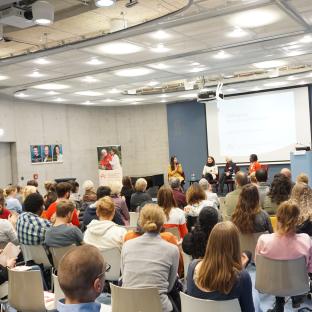
At a conference organised by the German Alzheimer association Deutsche Alzheimer Gesellschaft (DAlzG) on 2 December 2019, the question of how support could be better opened up for people from a migration background and how more information and education can be provided, was discussed in depth.
An important finding of the meeting was that it is not about looking at migrants as a closed group, but that each individual and their family must be considered individually, along with existing needs and resources. In addition to gender, education, religion or social class, culture is just one criterion that shapes people. The combination of these different characteristics is crucial as it can inhibit or encourage the activation of self-management skills. It quickly becomes clear that, in general, people have very few differences that matter and in fact have a great deal in common, points out DAlzG. Nevertheless, access to individual target groups remains different.
The conference, held in Berlin, was part of the project entitled “Dementia and Migration“, which is funded by the German Federal Ministry for Family Affairs, Senior Citizens, Women and Youth. Further information for stakeholders as well as people with dementia and a migration background is available on this website, operated by DalzG: