A timely and accurate diagnosis of Alzheimer’s disease (AD) is important for proper treatment. Scientists can pinpoint the disease during life, by testing for the arrival of AD proteins in the cerebrospinal fluid (CSF), so current guidelines recommend the use of these protein markers in practice. The guidelines are, however, difficult to translate into the daily work of doctors and researchers. Determining the protein markers costs money, and a lumbar puncture - which can be painful and carries its own risks - is required to obtain the CSF. Moreover, the protein marker measurements do not always provide a clear diagnosis. So, doctors are faced with a daily dilemma: For whom is it “worth” doing a lumbar puncture and for whom is it better to omit the procedure?
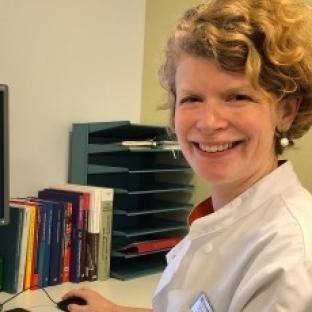
Hanneke Rhodius-Meester (pictured), a clinical geriatrician and researcher at the Alzheimer Center Amsterdam, together with colleagues from across Europe, set out to find a way to help doctors decide which patients would most benefit from a CSF test. Using data from the PredictND project (2014-2018) in which Hanneke Rhodius-Meester was a consortium member, and together with Combinostics, a company that develops software to assist doctors in the diagnosis of dementia, they developed a computer tool to help doctors to make this choice.
The researchers used simulated CSF protein marker values in the computer tool, based on data collected from 535 participants in clinical studies on dementia. By combining these with other diagnostic tests (brain scan and cognitive tests), the tool predicts which participants’ CSF markers would improve the reliability of diagnosis. The computer tool identified 140 out of 535 participants who would benefit from CSF marker tests, reaching a confident diagnosis for 71% of the included participants. Together, these results indicate that computerised decision support tools could be helpful in guiding doctors to decide whether or not a patient should have CSF testing. Their results were published in the journal PLOS ONE on 15 January 2020.
Read the paper, here: https://journals.plos.org/plosone/article?id=10.1371/journal.pone.0226784