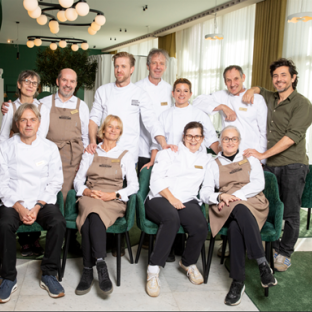
In October 2022, my husband Geert received the diagnosis of young-onset dementia, a form of Alzheimer's, at just 53 years old. It was a tough time of mourning and acceptance, but Geert is an optimistic person. Together, we quickly found the drive to turn our lives in a positive direction. Our focus is on what can be done, rather than on what no longer can. We don’t know what the future holds, but we’re determined to make the best of it. This mindset has brought many wonderful opportunities our way, including an invitation from the production company Roses Are Blue to take part in the TV show Restaurant Misverstand (The restaurant that makes mistakes). In this programme, host Dieter Coppens, along with chef Seppe Nobels, sous-chef Romina, and eight people with young-onset dementia, open a restaurant.
The show, which airs on the national channel VRT1, with the support of Alzheimer Liga Vlaanderen, aims to highlight what people with young-onset dementia are still capable of after their diagnosis, and that’s a lot. I look back on the filming with great joy; it was an unforgettable adventure, one that's hard to match. Television was completely new to me, but from the very first filming day - right in our home - I saw how the programme was made with so much calm, respect, and warmth. This gave both Geert and me a sense of peace, even though we were a bit nervous about the first filming days at the coast. The recordings took place in Ostend, along Belgium’s coastline. That first day of filming was intense. How would things unfold? But soon enough, not only did the participants bond, but the caregivers did too.
The crew took great care of the participants, while we, the caregivers, had time and space to connect. It’s hard to explain how, in just a few days, we formed such a strong bond with complete strangers. We quickly understood each other; few words were needed. Everyone had their own story, and we mainly listened. I soon realised we all shared the same motivation: to explain to others what young-onset dementia is, and what it means for the loved ones of those diagnosed. We wanted to show that it's not just about dealing with the diagnosis but also about supporting our partners and families, navigating administrative challenges, and dealing with a life that has been completely turned upside down. But we’ve managed to find our footing again.
There is life after this difficult diagnosis. While people with young-onset dementia may appear "normal," please understand they function differently. I'm incredibly thankful that the production company chose that unique approach, one that focused on each participant’s personal story. I truly hope this programme gets picked up in other countries and opens people’s eyes. It’s the ultimate anti-stigma show. After all, young-onset dementia can affect anyone. And those who face it deserve dignity, respect and understanding. I’m thrilled that the show has been nominated, and I’m crossing my fingers that the Emmy Award for ‘Non-scripted Entertainment’ goes to Belgium!