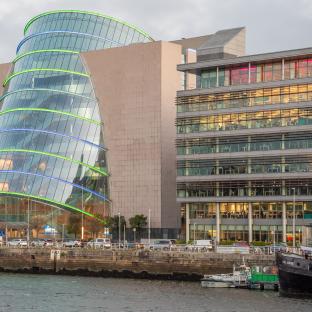
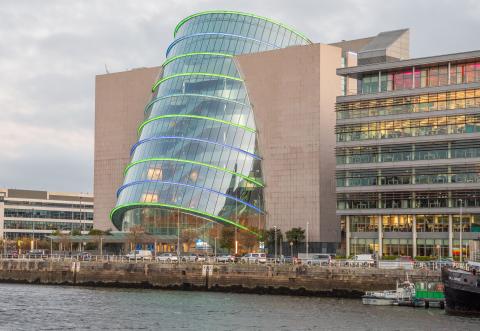
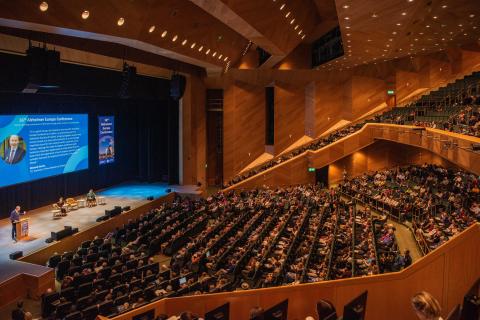
The 36th Alzheimer Europe Conference (#36AEC) “Sláinte: Building momentum in dementia through policy, research and partnership” was formally opened on the afternoon of 27 October. The conference took place at the Convention Centre Dublin (CCD) between 27 and 29 October 2026, attracting over 1,400 delegates from across Ireland, Europe and beyond, with 44 countries represented. On the agenda were three Keynote sessions, three Plenary sessions, 28 sponsored sessions, six series of Quick Oral Presentations counting 69 presentations, 50 parallel sessions involving 207 presentations, and 444 Poster presentations. All our presenters shared their research, knowledge and experience in a warm and welcoming atmosphere of collaboration.
Day one, 27 October
We were pleased to have the support of the Irish Presidency of the Council of the European Union to this year’s conference, offering a timely and unique platform to elevate dementia on both national and European policy agendas. We were also delighted to welcome Micheál Martin TD, Taoiseach (Prime Minister of Ireland) to the Opening Ceremony.
Having brought this prestigious event to Ireland allowed us to showcase national progress in dementia care, research, and advocacy. It also was an important opportunity to connect with people living with dementia and their families, carers and supporters, as well as volunteers and staff of Alzheimer associations, policy makers, health and social care professionals, researchers, academics and industry representatives from all over Europe and beyond.
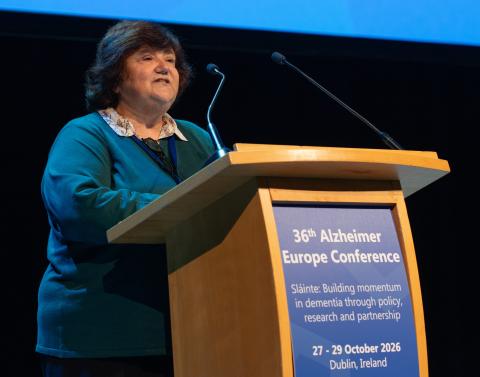
Maria do Rosário Zincke dos Reis, Chairperson of Alzheimer Europe, addressed delegates at the Opening Ceremony on 27 October, officially opening the conference and saying a special word of welcome to the Prime Minister and other distinguished guests. She thanked event gold sponsors, Lilly and Roche; silver sponsors, Bristol Myers Squibb and Siemens Healthineers; and bronze sponsors, BioArctic, Biogen, Eisai, Firalis, MSD and UCB, as well as making special mention of the outstanding partnership Alzheimer Europe was privileged to enjoy with its conference co-host, the Alzheimer Society of Ireland.
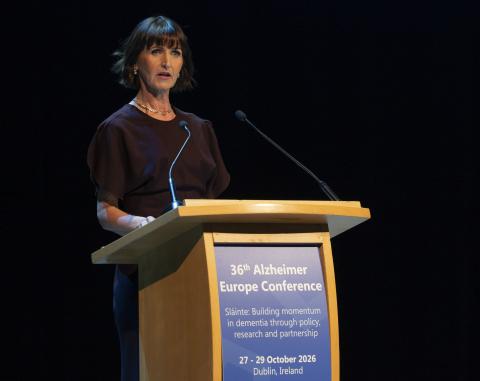
Up next, Cathy Reynolds, Chair of The Alzheimer Society of Ireland, welcomed delegates to Dublin, highlighting the valued relationship with Alzheimer Europe and Ireland’s special place in the European organisation’s history. She welcomed the conference as an opportunity to showcase progress, learn from colleagues across Europe and help shape the future of dementia care and support, whilst ensuring that people living with dementia and their families remained at the centre of the conversation. She then welcomed Micheál Martin TD, Taoiseach / Prime Minister of Ireland to take the floor. He welcomed delegates and offered his support for the Alzheimer Europe Conference. In a press release from The Alzheimer Society of Ireland, ahead of the event, the Taoiseach said:
“It is a great honour for Ireland to host the 36th Alzheimer Europe Conference in Dublin, in partnership with The Alzheimer Society of Ireland, bringing together people from across Europe at a time when dementia is an increasingly important issue for Irish society and for countries across Europe.
“The growing number of people living with dementia is something we need to plan for as our population ages. We need to ensure that our support and services continue to respond to people’s changing needs, enabling people with dementia to live well and independently for as long as possible, while also providing the right support for families and carers.
“Hosting this major European conference gives Ireland an important opportunity to show leadership and learn from the experience of our European partners as we consider how best to respond to dementia in the years ahead. I look forward to welcoming delegates to Dublin and to seeing Ireland play its part in improving the lives of people with dementia and their families, both here at home and across Europe.”
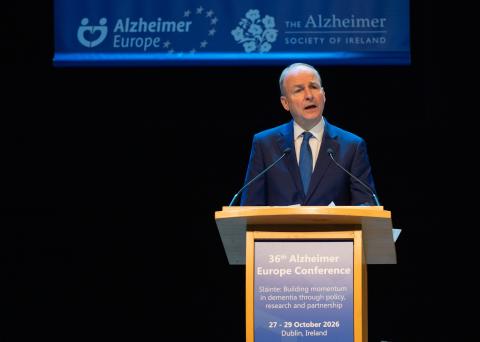
It was truly an honour and a privilege to have An Taoiseach at our conference and demonstrated both the importance of the event to the country of Ireland, and the importance of Alzheimer’s and dementia on the political agenda.
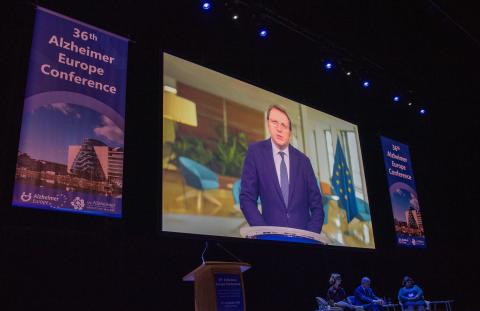
The importance of dementia on the European policy agenda was also in evidence, with Olivér Várhelyi, European Commissioner for Health and Animal Welfare, speaking to delegates via a video message. He thanked Alzheimer Europe and the Irish Presidency for bringing this important discussion to Dublin and emphasised some of the ways in which the European Commission is taking action to address the challenges presented by Alzheimer’s and dementia, under the Healthier Together initiative, supporting cooperation between Member States and civil society on mental health and neurological diseases.
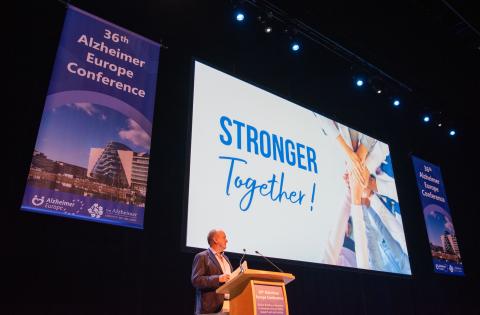
Our conference in Dublin marked the final one during the tenure of our Executive Director, Jean Georges, who will be retiring at the end of 2026. After 30 years leading Alzheimer Europe from strength to strength, he gave the first Keynote speech at this year’s conference, taking delegates through his time with our organisation, looking back at the many highlights and milestones.
“Our conference theme, Building Momentum in Dementia Through Policy, Research and Partnership, is particularly meaningful to me”, he began, noting that his presentation would focus on the importance of partnership, during his time at Alzheimer Europe.
He shared a number of milestones, including the beginnings of the organisation, in 1990, when three pioneers in the field of Alzheimer’s disease, Franz Baro (Belgium), Michael Coote (Ireland) and Henk ter Haar (Netherlands) held a meeting in Leuven (Belgium), and founded Alzheimer Europe. The growth and success of the organisation were made possible only through partnerships, and he stressed that it was only through the support of our national member associations, collaboration with European and national policymakers and researchers that we have been able to achieve so much. He drew particular attention to our longstanding partnership with INTERDEM, the European network of researchers working in psychosocial research on dementia. He also mentioned the importance of support from corporate sponsors, without whom our Annual Conference would not be possible.
“The principles underpinning Alzheimer Europe’s very existence have remained constant throughout the organisation’s 36-year history: cooperation across borders, mutual learning, and a shared commitment to ensuring that dementia receives the recognition and political attention it deserves”, he stated. “They have shaped our identity and guided our work, placing collaboration and partnership at the very heart of our organisation. None of the past three decades of accomplishments would have been possible without partnership. Partnership with our national member associations, national and European policymakers, researchers, industry sponsors and other supporters”.
Above all, he stressed the importance of involving people with lived experience. He thanked the members, chairs and vice-chairs, both past and present, of our European Working Group of People with Dementia (EWGPWD), which was founded in 2012, and European Dementia Carers Working Group (EDCWG), founded in 2022. “I believe that this human dimension, this collective voice and this commitment to shared decision-making are among the things that set Alzheimer Europe apart.”
Looking to the future, he said: “There is still much to do. We must ensure that progress in research translates into equitable access to diagnosis, treatment, care and support. We must continue to challenge stigma and discrimination, protect the rights of people living with dementia and make sure that no country or community is left behind.”
He thanked the Board and Chair, as well as past board members and chairs of Alzheimer Europe and its dedicated team. He also took a moment to wish his successor, Angela Bradshaw, all the best in the role of Executive Director – a role which she will take as from 1 January 2027. “Angela will be taking on this responsibility at an important moment in our history”, he said. “And I am confident that, with her leadership and the commitment of the Board, staff, members and partners, Alzheimer Europe will continue to grow, develop and build on the foundations we have established together.” With the importance of partnership and collaboration as his primary message, he ended by reminding everyone, “we are stronger when we work together.”
Following the opening ceremony and keynote lecture, delegates had the chance to join one of ten parallel sessions, and after a short break, a further ten parallel sessions were held, after which the conference programme for Day 1 ended with a Welcome Reception held in the Foyer of the CCD. This was an opportunity for delegates to network but also to relax after a busy day, with welcome words coming from Andy Heffernan, CEO of The Alzheimer Society of Ireland, who wished everyone “Céad míle fáilte", a traditional Irish expression that translates to "a hundred thousand welcomes".
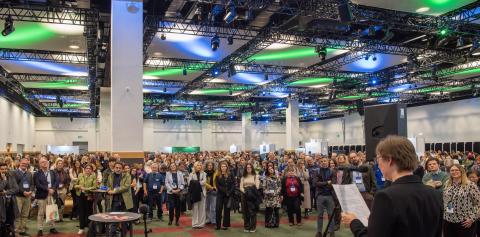
This was also an opportunity for us to thank Jean Georges for 30 years of hard work and dedication to our cause. Deputy Executive Director Angela Bradshaw invited to the stage our Chairperson, Maria do Rosário Zincke dos Reis, Chairperson of the Alzheimer Europe Foundation, Heike von Lützau-Hohlbein, Chair of the European Working Group of People with Dementia, Kevin Quaid, and Dianne Gove, Director for Public Involvement and Ethics, to share some memories of working with Jean and express the gratitude of the Board, Foundation, working groups and staff of Alzheimer Europe.
Day two, 28 October
Prior to the first plenary on the morning of the second day, delegates were able to choose from a possible ten parallel sessions.
The first Plenary of the conference was a joint session organised by the members of the EWGPWD and the EDCWG, who took to the stage to share their lived experience with delegates. The session was moderated by Kevin Quaid, Chairperson of the EWGPWD (Ireland) and Trevor Salomon, Chairperson of the EDCWG (United Kingdom).
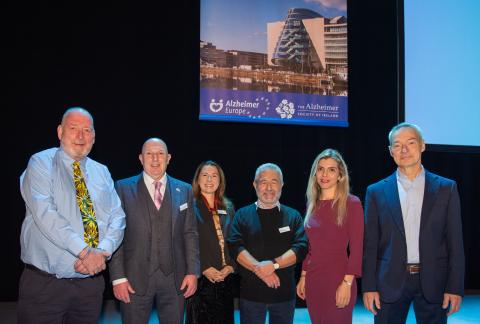
Kjell Ehn, a member of the EWGPWD from Sweden, was the first speaker. His talk, “My inner game with Alzheimer’s” focused on how he mentally handles the awareness of his continuously declining cognitive and physical functions, and how he has dealt with the challenges he has experienced along the way.
“The main challenge is that you know that there is only one way, and that is downward”, he said, “and you don´t yet know when, how, or at what speed.” He also stressed how hard it is to accept all the things that he suddenly, from one day to the next, has had to start preventing himself from doing, “just for the fear of not being capable”.
He concluded that, when someone is diagnosed with a cognitive disorder such as Alzheimer's disease, there is a need to provide support not only for the physical aspects of the condition but also for handling its mental and emotional challenges. “This support is essential if people, like me, are to continue living life fully and enjoying it for as long as possible.”
Up next, Christina Zioga, member of the EDCWG from Greece, spoke about “The caregiver phenotype: Clinical observations on multitasking, genetic paranoia, and the therapeutic efficacy of peer support”. Her talk explored the lived reality of caring for a person with dementia while balancing multiple roles—as a mother, wife, physician and daughter, highlighting the often invisible emotional, practical and financial burden carried by families, particularly when formal health and social support systems fall short.
She gave voice to the private fears that many carers rarely express, asking questions such as: “Could I be in my mother’s place in a few years?” and "Will I lose my ability to learn?" She pointed out that “Living alongside Alzheimer's inevitably raises questions about genetics, risk and our own future, while reminding us that dementia affects far more than memory.”
Finally, her talk reflected on where carers find the strength to continue. She said that the European Dementia Carers Working Group had become a source of solidarity, friendship and shared understanding for her and others. She finished with a message of warmth, humanity and hope: “Across borders and cultures, carers discover that they are not alone—and that sometimes, a hug, a laugh and genuine human connection can carry an extraordinary load.”
The next speaker, Hatice Sertaç Süslü, member of the EDCWG from Türkiye, presented “From flight mode to fight mode: How community support transformed me into an empowered family care”. She began by noting that longer lives are worth celebrating — but that they require support:
“My mother’s 80th birthday made me reflect on how many small victories, medical interventions and acts of care can make a longer life possible. Longevity is rarely one miracle; it is hundreds of small victories shared by people living with dementia, families and healthcare professionals.”
She also pointed out that dementia transforms whole families, not just individuals. “Dementia does not happen only to the person diagnosed. It changes relationships, roles and everyday life for everyone around them. Yet meaningful connection can survive even when memory changes.”
Her closing message was again one of humanity and of strength in connections with others: “You do not have to fight alone. My own journey taught me that being a good daughter did not mean doing everything myself. Support from the Alzheimer’s Association, peer carers, healthcare professionals, my family and an international community taught me to ask for help. My message to other families is simple: connect with your community before you think you need it.”
Stuart Dougall, member of the EWGPWD from the United Kingdom (Scotland) shared that the best advice he was given regarding living well with dementia was quite simple: “Have a focus, have a routine, keep motivating yourself, keep trying things you find difficult, and above all, live your life.”
“My life has changed”, he continued, “but it is far from over. I’m determined to keep doing the things I enjoy for as long as I can.” He also said that technology had become an important part of helping him to stay independent, and that “sometimes the simplest solutions can make the biggest difference.” He decided early on that he would make the very best of his situation for as long as possible, and his powerful message for others diagnosed with dementia was “Dementia may change your life, but it doesn’t have to define it.”
Trevor Salomon and Kevin Quaid thanked all the speakers for their excellent presentations and the session closed with a heartfelt and rapturous round of applause from the audience. Kevin also presented a trophy to former Chairperson of the EWGPWD, Chris Roberts, who attended the conference in Dublin together with his wife and supporter Jayne Goodrick, in thanks for his years with the group and the important role he played in the group and in our work.
In the middle part of the day, several symposia took place, including one called “From biomarkers to lived experience: Acting earlier in Alzheimer's disease”, organised by conference Gold sponsors Eli Lilly & Company. Concurrent special symposia included one organised by DEMPACT and one by Fondation Médéric Alzheimer, as well as one from our co-hosts The Alzheimer Society of Ireland, with European and national policymakers (see separate articles about the Lilly and ASI symposia). The afternoon also saw a further ten parallel sessions, and throughout the day, delegates were able to view poster presentations, exhibited in the Foyer, and to speak to poster presenters about their research.
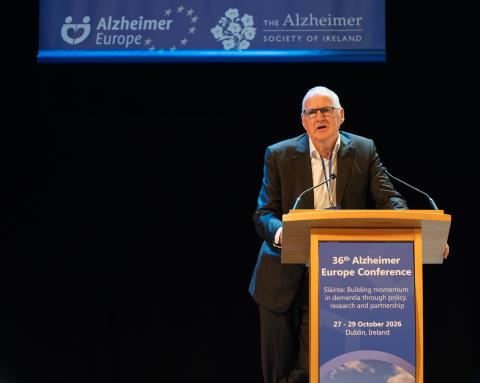
The second Keynote lecture of the conference was delivered by Eamon O’Shea, Emeritus Professor of Economics in the School of Business and Economics at the University of Galway. His lecture, entitled “Public policy for dementia in Ireland: past, present and future”, emphasised that care for people with dementia has seen significant improvement in Ireland in the past twenty years.
“There is now a much stronger focus on personhood and psychosocial functioning across all aspects of care”, he said, noting that the new Model of Care for dementia has a strong emphasis on the availability of services to allow for earlier assessment and diagnosis. He also stressed, however, that policy implementation continues to be a problem, “mainly because of inadequate funding to support a genuine person-centred, autonomy-oriented approach to care of people with dementia” and pointed out that “there is still no statutory scheme for home care provision in Ireland. Family carers continue to be the main source of support for people with dementia.”
In closing, Prof. O’Shea drew attention to some of the differences in services and supports for people with dementia across the country: “There is wide variation in waiting times for diagnostic assessment of dementia. Workforce shortages and dementia training are also impacting on dementia care in Ireland,” he said.
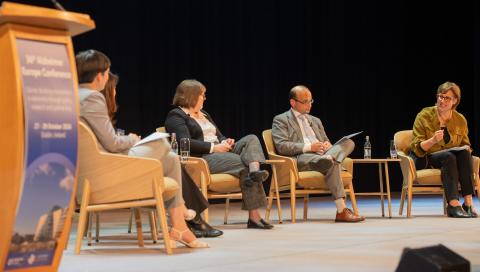
The second plenary session of the conference took the form of a roundtable discussion, moderated by Angela Bradshaw. The session was titled “What place for dementia in national and European disability, social and brain health programmes?”, a question which was debated by four expert speakers, Iracema Leroi (Global Brain Health Institute, Ireland), Soohyun Kim (OECD Health Division), Anthony Scerri (University of Malta) and Louise Hopper (Dublin City University, Ireland).
At the end of Day 2 of #36AEC, three further symposia were organised, one by JADE - the Joint Action on Dementia, one session sponsored by EMEIS, and another called “Dementia Researchers of the Future" (see separate article about this symposium).
Day three, 29 October
Prior to the first plenary in the morning, delegates were able to choose from a possible ten parallel sessions and, throughout the day, delegates were able to view poster presentations, exhibited in the Foyer, and to speak to poster presenters about their research. The third plenary of the conference looked at advances in diagnosis, treatment and care and was moderated by Mario Possenti (Vice-Chairperson of Alzheimer Europe, Italy).
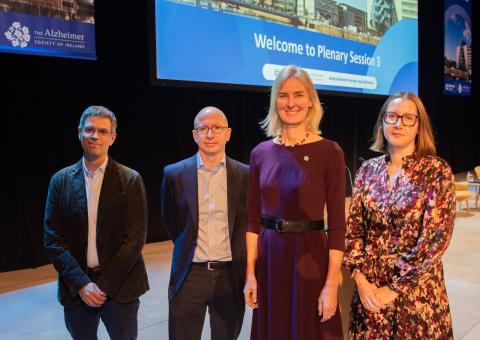
Professor Seán Kennelly, a Consultant Geriatrician and Director of the Institute of Memory and Cognition at Tallaght University Hospital, and Clinical Associate Professor of Medical Gerontology at Trinity College Dublin, presented “The Evolution of Alzheimer’s Disease Diagnosis: From Clinical Uncertainty to Biological Precision and Personalised Care”.
Professor Wiesje van der Flier is Chief Executive Officer of Alzheimer Nederland and also holds an endowed chair at the department of Epidemiology & Data Science of Amsterdam UMC. She took the floor next, with a talk called “Advances in treatment from the perspective of clinicians, patient advocates and patients”.
The third and final speaker at this plenary session was Emma Wolverson, a Clinical Psychologist and Professor of Ageing and Dementia at the Geller Institute of Ageing and Memory, University of West London (United Kingdom) with a presentation on “Critical moments in dementia care: advancing research and practice”.
Prior to lunch, several symposia took place, including one called “Patient-focused drug development”, organised by conference Gold sponsors Roche and moderated by Sasha Bozeat (Switzerland). Concurrent special symposia included one organised by Fundació Pasqual Maragall and one by Fondation Médéric Alzheimer (see separate articles about the Roche symposium and about Fundació Pasqual Maragall’s involvement in the conference).
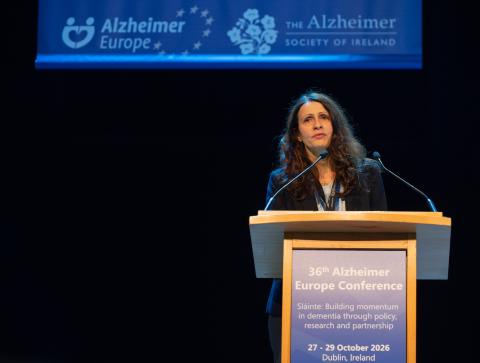
The afternoon saw a further ten parallel sessions, after which the third and final Keynote Lecture of the conference was delivered by Lorina Naci, Professor of Psychology and leader of the “Consciousness and Cognition” group at the School of Psychology, at Trinity College Dublin. During her lecture, Prof. Naci stated:
“The window for dementia prevention opens decades before symptoms appear. Research from the PREVENT Dementia programme demonstrates that subtle changes in brain network organisation associated with genetic risk for Alzheimer’s disease can be detected in cognitively healthy middle-aged adults, potentially opening new opportunities for earlier identification and intervention.
“Genetic risk is not destiny: Lifestyle matters. Our findings show that engaging in intellectually, socially and physically stimulating activities is strongly associated with better memory and cognitive performance in midlife, including among people with inherited risk of dementia. Building cognitive reserve is a powerful, accessible component of dementia prevention.
“Dementia prevention must become earlier, more personalised and multidimensional. Understanding how genetic vulnerability, biological sex, lifestyle and brain health interact will help us develop more targeted prevention strategies that strengthen cognitive resilience across the lifespan.”
At the Closing Ceremony, Andy Heffernan, CEO of The Alzheimer Society of Ireland (ASI) thanked everyone for their participation and for travelling to Ireland for the conference, noting the fantastic amount of work put in by Alzheimer Europe staff and his team at The ASI as co-hosts, and the great result.
Maria do Rosário Zincke dos Reis, Chairperson, Alzheimer Europe thanked delegates, speakers, our co-host The ASI, and conference sponsors alike and wished everyone a safe return journey.

Attendees at the closing ceremony were treated to an uplifting and deeply moving performance by Dublin’s Forgetmenots Choir, a dementia and age-friendly community choir.
Alzheimer Europe would like to thank to all delegates who joined us at #36AEC, and we hope to see you next year for #37AEC in Belgrade!
Acknowledgement
Alzheimer Europe and the Alzheimer Society of Ireland gratefully acknowledge the support they have received for the 36th Alzheimer Europe Conference.
We received funding by means of sponsorship to support the delivery of our conference from multiple sponsors. Our sponsors had no editorial input or control over the agenda, content development or choice of speakers, nor opportunity to influence except for the sponsored presentations . The names of our sponsors are available here.
The 36th Alzheimer Europe Conference has been deemed fully compliant by EthicalMedTech's Conference Vetting System.
Full conference report and photo highlights
You can read the full conference report including further details on sessions, as well as photo highlights, here: https://www.alzheimer-europe.org/conferences/2026-dublin/conference-highlights
