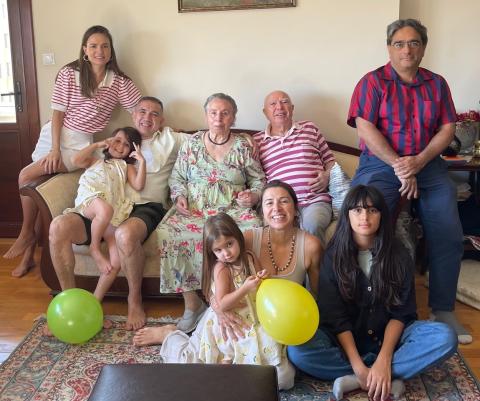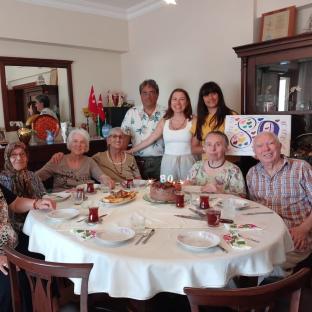
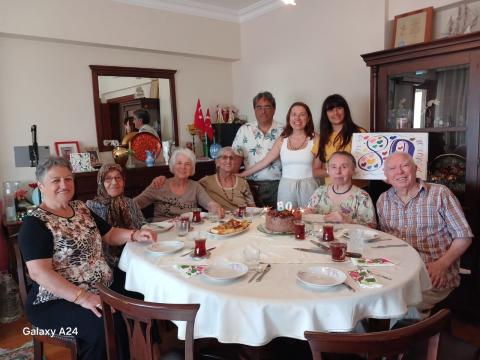
My mother turned 80 this June. In many ways, she is a pioneer.
She is the first woman in her family to live this long. Her mother died at 72 or 73, six months after a hip fracture. At that time, hip replacement surgery was not widely accessible. My mother's grandmother passed away peacefully in her sleep at 71. Yet my mother, despite her many health challenges, reached her 80th birthday surrounded by her family.
Her journey has not been easy. She was diagnosed with mixed dementia, including both Alzheimer's disease and vascular dementia, at the age of 72. Brain imaging showed extensive small-vessel disease, the result of vascular risk factors accumulated over many years. She has also lived with hypertension, prediabetes, hearing impairment, osteoporosis-related fractures, and other age-related conditions.
During the past three years, my mother's three closest friends have all passed away. Yet she is still here.
This is an important reminder that a dementia diagnosis is not the end of life. With appropriate medical care, family support, rehabilitation, social engagement, and attention to overall health, many people with dementia can continue living for years. Their lives still matter. Their birthdays still matter.
My mother's story is also a story of progress. She was better educated than the women who came before her. She benefited from advances in medicine, surgery, diagnostics, rehabilitation, and public health that were unavailable to previous generations. Because of that progress, more people today will live into their eighties and beyond.
For generations, the challenge was surviving long enough to reach old age. Today, many of us will do just that. We are succeeding in helping people live longer, but we have not yet fully adapted our thinking to what those extra years require.
Blood pressure, diabetes, hearing loss, physical activity, social engagement, sleep, and cardiovascular health all influence how we age. We should not wait until old age to start taking care of our brains. The choices we make in midlife may shape our cognitive health decades later.
As we celebrated my mother's 80th birthday, I found myself reflecting on a simple truth: thanks to education, science, and social progress, many of us will live longer than our parents and grandparents. Our challenge now is to ensure that we spend those extra years as healthily, actively, and meaningfully as possible.