I have been living with a dementia diagnosis since 2017 and I experience every day what this illness means for the lives of people with dementia and for their families and close companions. When the first reports about new drugs like lecanemab and donanemab appeared in public, I was not simply excited. The way many media outlets presented them – sensational, strongly hope inspiring, and often very simplified – made me thoughtful rather than confident.
At the same time, I know that these drugs have gone through a long and demanding path of research, clinical trials and regulatory review. Before Lecanemab and Donanemab even reach us as patients, many experts in research, clinical practice and regulatory agencies have examined the data and, in the end, made a cautious but still positive decision. I am aware that these processes are serious, careful and based on high professional competence – and precisely for that reason I expect that this groundwork is respected in later assessments.
In the current public debate, people often refer to the Cochrane review, which concludes that lecanemab and donanemab have “only very small or no clinically meaningful benefit.” For me as a person living with dementia, this does not automatically mean that these drugs are worthless for the people for whom they have been approved. To me, it means first of all that the chosen assessment criteria only partially capture the – possibly small – effects in everyday life and the hopes of people like me. Experts use measurement tools that focus mainly on numbers, scales and tests. What counts in our daily lives – for example being able to remain independent a bit longer, to orient ourselves more easily or to experience important moments more consciously – often gets lost in these evaluations or disappears behind formal thresholds such as “clinically meaningful.”
When I speak about “access to treatment”, I do not mean only a formal marketing authorisation somewhere in Europe. For me, access means that eligible people can realistically receive the treatment: with timely and accurate diagnosis, understandable information about benefits and risks, fair coverage within a solidarity-based health system and practical possibilities to cope with such a demanding therapy in everyday life (travel, MRI, support, organisation). Access also means that I, as an adult with decision-making capacity, am allowed to decide, together with my doctors and with good information – and that others do not decide in advance “for my protection” that I should not even get this choice.
It is important to have a transparent, honest and open-ended weighing of benefits and risks. Critical, independent assessments – for example by health technology assessment bodies and evidence review groups – are essential. But when drugs like lecanemab and donanemab have only recently entered clinical practice and are still under observational research, I experience very sharp, braking evaluations as counterproductive. I live with a currently incurable disease and I place my hope in research. From my perspective, very early and strongly negative messages mainly contribute to blocking possible opportunities instead of examining them further in a responsible and well monitored way.
Lecanemab and donanemab should neither be portrayed as miracle cures nor dismissed as useless or inherently dangerous. I wish for an open-ended evaluation: potential benefits and risks should be named honestly, investigated further and weighed jointly together with people with dementia – without a pre-decided conclusion that these drugs must either definitely be made available or must definitely never be used. What matters to me is that people with dementia are involved in this open deliberation and that the public is informed about this highly-relevant health topic in a transparent, understandable and non-lobby-driven way. Opportunities and risks of treatment approaches such as donanemab and lecanemab should be explained in a way that people can follow – with clear words instead of headlines.
In many debates the focus is mainly on scores, scales and statistical significance. For me, even small changes mean something very concrete: perhaps a few more months in which I can still make my own decisions, still go shopping on my own, still attend a concert or consciously experience an important family event. Even modest slowdowns of decline can be very meaningful for my life and for the lives of my relatives. My remaining time is limited and precious – every bit of clarity gained, every delayed deterioration can make a difference.
I know that new therapies carry risks and that there is no guarantee of success. Nevertheless, I want to have the chance, with good information, to decide myself about chances and risks, together with my doctors. It harms my self determination if others decide in advance that this possibility should be withheld from me “for my own protection.” I do not expect any drug to cure my disease or solve everything. But I do expect our health system to find ways to test new therapies in a controlled way, to conduct good accompanying research and to involve us, people with dementia, from the very beginning – with specialised centres, clear indications, close monitoring and open, honest conversations with me and my relatives.
I call for the perspective of people like me – people living with dementia – to be systematically included in assessments, guidelines and decisions. Please do not only talk about us, but rather talk with us – even when the evidence is complex and the decisions are difficult. Give me and other people with dementia the opportunity to give our informed consent or refusal, instead of filtering everything in such a way that only a “no” reaches us in the end.
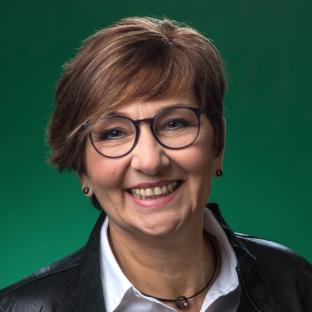
By Lieselotte (Lilo) Klotz, living with Lewy Body Dementia and Parkinson’s disease, Member of the Advisory Board “Leben mit Demenz” - German Alzheimer Association (DAlzG) since 2020, Member of the European Working Group of People with Dementia (Alzheimer Europe) since 2023, Member / Co-Speaker of the DZNE Patient Advisory Board since 2022