I had the privilege of participating in the EDEM Conference on Ethics in Dementia in Albania where I participated in a panel discussion and shared a presentation on the ethical dilemmas we faced on my Mom’s dementia journey. I will remember this experience not only for the discussions, but also for the people, the place and the connections it created.
First and foremost, EDEM is a wonderful group of people. What struck me most was the diversity of people in the room, social workers, nurses, physiotherapists, psychologists, academics, ethicists, physicians, advocates and family caregivers came together around a shared interest in improving the lives of people living with dementia and those who care for them. It created an environment where professional knowledge and lived experience could meet as equally valuable parts of the conversation.
And then there was Albania. It was my first visit, and I was impressed by its beauty, warmth and energy. From Tirana to Berat and Elbasan, the hospitality made the experience even more special.
I was particularly pleased to participate in the panel “Stigma and Ambivalent Grief.” The panel brought together three complementary perspectives: ethics and dignity, psychological adaptation and emotional ambivalence, and my own perspective as a family caregiver and advocate. We explored what “loss” means in dementia—not simply the loss of abilities, but changes in relationships, communication, independence, identity and expectations for the future. We also discussed whose grief is recognised, whose emotions remain difficult to express, and whether the expectation to “cope well” can itself become another pressure for families. Big thanks to Dorota Szcześniak, Gabija Jarašiūnaitė-Fedosejeva and Prof. Dr Chris Gastmans for the excellent discussion.
My own presentation allowed me to bring the lived experience of caregiving into the conversation. Speaking not as an academic or an ethicist, but as a daughter, caregiver and advocate, reminded me how important it is that the voices of families are included when we discuss ethics in dementia.
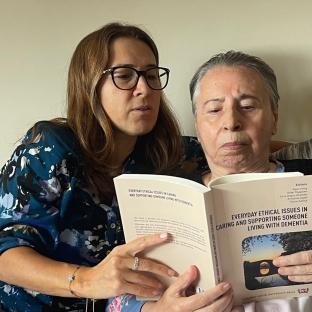
One of the most meaningful moments came at the end of the conference, when I was presented with a copy of “Everyday Ethical Issues in Caring and Supporting Someone Living with Dementia”, printed by İstanbul Gedik University Press.
I returned home with new friendships, new perspectives and a renewed appreciation of how much we can learn when we bring ethics, professional expertise and lived experience into the same room.