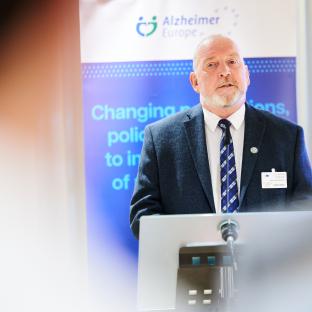
Over the past seven years I have been lucky enough to have been in the European Parliament and the European Commission each year in Brussels representing the over 12 million people who are affected directly by dementia all over Europe and each occasion is special in its own right and where I have been able to ask questions when there was a need to this was different.
I was honoured to make a speech in the European Parliament at an exhibition and it would be up there with some of the greatest honours of a lifetime for me, to share the platform with so many MEPs and some from Ireland who you would have to be proud of, none more so than my good friend Nina Carberry, for someone who was not in mainstream politics for a long time she found her feet very fast in Europe and I have to say works tirelessly for not just people all over Europe but especially the people of Ireland.
Trevor Salmon from the carers' group spoke as well as the FTD Brothers Cian and Jordan who have done amazing work in highlighting dementia especially front temporal dementia, which unfortunately took their mum at a very early age. Living with dementia brings its challenges and some days are good and more are not great, being involved with Alzheimer Europe and having the privilege to speak in the European Parliament was definitely one of the good days.
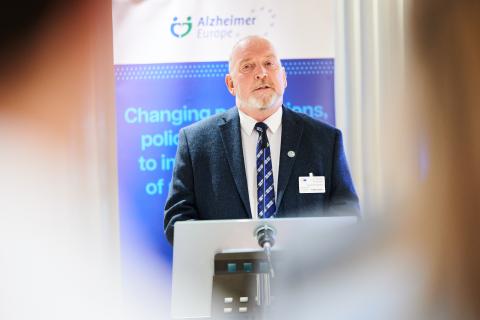
Here are the words that I spoke:
“Today, I am delighted to be at the launch of this remarkable exhibition here, at the heart of Europe I genuinely believe the information on display should be compulsory viewing, for decision-makers across the European Union, because it shows the reality of dementia and the scale of the challenge facing our continent and indeed the world It is easy to be distracted by the many challenges Europe faces today. There are many urgent issues competing for attention.
But one thing is clear. When the EU decides something matters, Europe can make a difference. That is why we are here today.
We are asking Members of the European Parliament not just to look at this exhibition but to listen. Listen to the voices of people living with dementia. Listen to their families and carers. Listen to their experiences. Because those of us living with dementia are the real experts in what it means to face this condition every day. And then we ask you to speak on our behalf.
Today, more than 12 million people across the EU are living with dementia. Within a generation, that number is expected to reach almost 20 million. Yet despite those numbers, dementia still does not receive the political attention it deserves.
Dementia is not just a health issue. It is a social issue, an economic issue and a human rights issue. It affects how people work, travel, access services, stay connected to their communities and live their everyday lives. Europe can make a difference in many ways. Of course, research matters. Greater investment and stronger cooperation between researchers, healthcare systems and industry can help drive the breakthroughs that people are waiting for.
The European Union can help tackle stigma and improve understanding of dementia. It can champion the rights, dignity and inclusion of people living with the condition. It can encourage governments, businesses and public services to think differently
about accessibility and participation. The decisions made in Europe influence many aspects of everyday life, from transport and banking to digital services, consumer protection and employment policy. Those decisions can help ensure that people living with dementia are included rather than excluded.
Europe also has a vital role in supporting the workforce that an ageing population will need. In Ireland, we often speak about the importance of home care and community-based support in helping people stay in their homes for as long as possible. Through employment and social policy, the European Union can help support carers, strengthen the care workforce and promote high standards across Member States. It is encouraging to see the growing attention being given to neurological health within the European Parliament SANT committee.
That is an important first step. But we need to go further. We need European countries working together. We need the European Commission to recognise dementia as one of the major challenges facing our ageing population. And we need a coordinated European response that matches the scale of that challenge. Together, we can build a Europe that understands dementia, values people living with the condition, and acts with urgency to support them and their families.
And on a personal note, I would love to see this exhibition come to Ireland during our Presidency of the Council of the European Union. It deserves to be displayed in a place where political leaders can see both the scale of the challenge and the inspiring work being done across Europe to address it.”