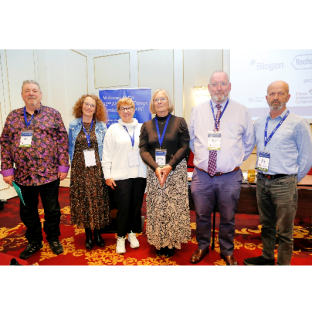
One of the highlights of the 32nd Alzheimer Europe Conference, was a special symposium organised by the European Working Group of People with Dementia (EWGPWD). The symposium was chaired and facilitated by the current Chairperson of the EWGPWD, Chris Roberts (United Kingdom - Wales). The four speakers at the session discussed how different aspects of their lives had been affected by dementia and how they are “building new bridges” to try to improve their lives and those of others. The speakers were:
• Vice-Chairperson Kevin Quaid (Ireland), who spoke about the relevance of a proper and timely diagnosis of dementia. He referred to his own experience of a diagnosis of a less common type of dementia (Dementia Lewy Bodies)
• Erla Jόnsdόttir (Iceland), who shared her experiences related to dementia and employment. In particular, she told the audience how she experienced the transition from being an active person in the working place to suddenly lacking a specific role or purpose in everyday life
• Nigel Hullah (United Kingdom), who discussed the contribution of people with dementia to different aspects of research, policy- and service-development relevant to them. He drew on the concept of “co-production”, and
• Angela Pototschnigg (Austria), who talked about the importance of having a stable connection, “a bridge”, between people with dementia and their relatives and carers. She feels it is her task to maintain and create connections, by informing others about her everyday life with memory problems. Lieselotte Klotz (EWGPWD member from Germany) supported Angela with the translation from German to English.
Chris Roberts said: “Our symposium at the Alzheimer Europe Conference was an hour long and was organised and written by ourselves, members of the EWGPWD. Using our collective knowledge and personal experiences to speak about the ‘bridges’ we have built during our diagnosis, whether it be: accepting our diagnosis and learning/adapting to live with it; building bridges with families and professionals to help them understand and work with us for better quality of life for all and to further research/projects that might not help us directly, but might help future generations; or building the bridges needed to alleviate the stigma and assumptions that surround everyone living with life-changing diagnoses which lead to dementia. I’m very proud to be the Chair of a group of amazing individuals who, through adversity, have not only become great friends but inspirational members of the EWGPWD, working closely with Alzheimer Europe.”
