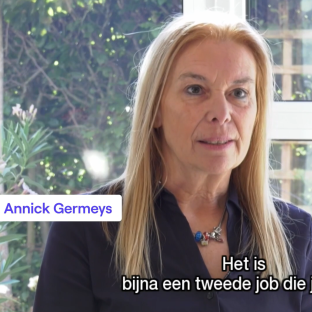
On World Alzheimer’s Day, I had the opportunity to share my experience as a partner and carer on VRT NWS, Belgium’s public broadcaster, following the publication of a new study by Sciensano, funded by Stop Alzheimer, the Belgian Alzheimer's Research Foundation, on the societal cost of dementia in Belgium.
The figures are striking. Dementia care currently costs Belgian society more than EUR 7 billion per year. An estimated 214,736 people are living with dementia in Belgium today, and this number could rise to around 353,000 by 2050. A significant part of the care is carried by families. People living with a person with dementia provide, on average, 139 hours of care, supervision and emotional support per week. Even when someone moves into a residential care facility, relatives continue to provide an average of 30 hours of support each week.
The study estimates the economic value of informal care at EUR 2.9 billion per year. If this care were entirely replaced by professional care, its estimated value would rise to EUR 10.6 billion. These figures do not represent an actual bill, but they make visible the enormous contribution families are already making. Thanks to Stop Alzheimer, I was given the opportunity to put a human face to these figures and to share what caring for a person with dementia actually means in everyday life.
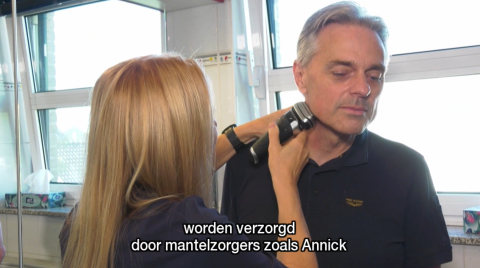
My husband Geert was diagnosed with young-onset Alzheimer’s disease in 2022, at the age of 53. For me, being his carer is not simply about the number of hours I spend providing care. It means that you gradually take over the management of your partner’s life. You become not only a carer, but also a driver, planner, administrator, gardener, handyman and many other things your partner used to take care of. Responsibilities that once belonged naturally to them gradually become yours. Not because you chose this role, but because it becomes necessary. You think ahead. You organise appointments. You make decisions. You support communication when words become difficult. And even when you are not physically providing care, the care is often still in your mind.
Much of this happens naturally because you love the person you are caring for. But love does not make the change less profound. The life we had imagined together is no longer the life we are living. Yet life continues. I remain Geert’s wife. Being a carer has become an additional dimension of our relationship, not a replacement for it. We still have family life, humour, small joys and moments of connection.
That is why these figures matter. They show how much our societies already rely on informal carers. But they should also lead us to ask what families need to make this sustainable. Carers need timely information, a clear point of contact after diagnosis, flexible respite care, practical support and services that adapt as dementia progresses. And they need to be involved in dementia policy and research. This is precisely why I became involved with Alzheimer Liga Vlaanderen and Alzheimer Europe: to help ensure that the lived experience and collective voice of carers are heard when decisions about dementia care, policy and research are being made.
Behind every figure is a person, a relationship and a family. A life that has taken an unexpected turn but continues to be lived. This was the broadcast : https://vrtnws.be/p.K7vmEpVmA6o
