Ahead of the 36th Alzheimer Europe Conference in Dublin, The Alzheimer Society of Ireland (The ASI) CEO Andy Heffernan wrote in September that the event would provide an opportunity to help shape Ireland's approach to dementia over the next decade. It did exactly that.
Across the three days in late October, discussions ranged from research and diagnosis to care, support and policy, with a consistent emphasis on listening to people with lived experience of dementia and ensuring their voices were woven throughout every aspect of the conference.
When delegates arrived at the Convention Centre, there was a real sense that months, and in many cases years, of planning had come to fruition. The energy, dedication and hard work, not to mention the collaboration with our co-hosts Alzheimer Europe, that had gone into hosting the event were apparent throughout. Having Taoiseach Micheál Martin (Prime Minister of Ireland) officially open the conference felt particularly significant as it was during Ireland's Presidency of the Council of the European Union. It was also a clear demonstration of the importance being placed on dementia in Ireland.
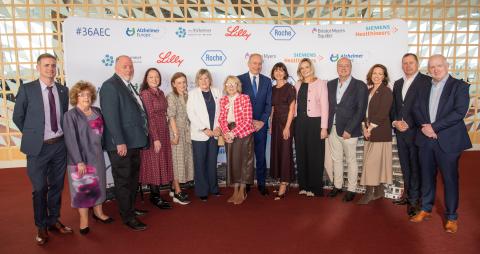
For The ASI, the conference provided an opportunity to share experiences, learn from others and highlight the important work taking place in Ireland. It also came at a time of significant developments in dementia research, with advances in treatment and diagnostics offering new possibilities for the future.
The ASI team played an active role across the programme, leading six sessions on topics ranging from services and supports, community engagement and family carer training to research, lived experience and the arts, while also contributing to a range of other presentations.
There was recognition of the advances that have been made, but also an acknowledgement that challenges remain for people living with dementia and their families, and a willingness to talk openly about what still needs to change.
A key aspect was hearing directly from people affected by dementia. People who use ASI services, alongside members of the Irish Dementia Working Group (IDWG), the Dementia Carers Campaign Network and the Dementia Research Advisory Team, stood up and generously shared their stories and expertise.
Ireland's representation within the European Working Group of People with Dementia and the European Dementia Carers Working Group was also evident, highlighting the important role Irish advocates continue to play at a European level.
The launch of the updated Charter of Rights for People with Dementia by The ASI and the IDWG put a firm focus on human rights. Developed by and for people living with dementia, the Charter is built on the principle that a dementia diagnosis should never diminish a person's rights, choices or place in their community.
More than anything, the conference reinforced that people affected by dementia are the experts in their own lives. All of us must listen to them and learn from them when they tell us what they need.
Dementia policy was also high on the agenda, with Irish and European political leaders, along with advocates and experts, discussing how to ensure dementia remains a priority across Europe in the years ahead.
Looking back, much has changed. When The ASI was founded in 1982 by Winifred Bligh and Imelda Gillespie, both of whom had been affected by dementia in their own families, there was little public understanding of dementia. There is still more to do, sure, but a conference that places people living with dementia and family carers at the centre of it shows just how much attitudes have changed.
The very existence of an award dedicated to addressing stigma as part of one of Europe's leading dementia conferences is a reminder of how much more open the conversation around dementia has become in recent decades. Irish creativity and advocacy were celebrated when Mike Hanrahan's A River Rolls On, recorded with the Forget-Me-Nots Choir, received an Alzheimer Europe Anti-Stigma Award. Stigma surrounding dementia is still there, but it is understood and discussed very differently today.
Following the week in Dublin, what stands out most is that people affected by dementia must continue to be at the very centre, in the absolute thick of the conversation. That remains at the core of everything The ASI does and will continue to guide our work long after the conference has ended.
